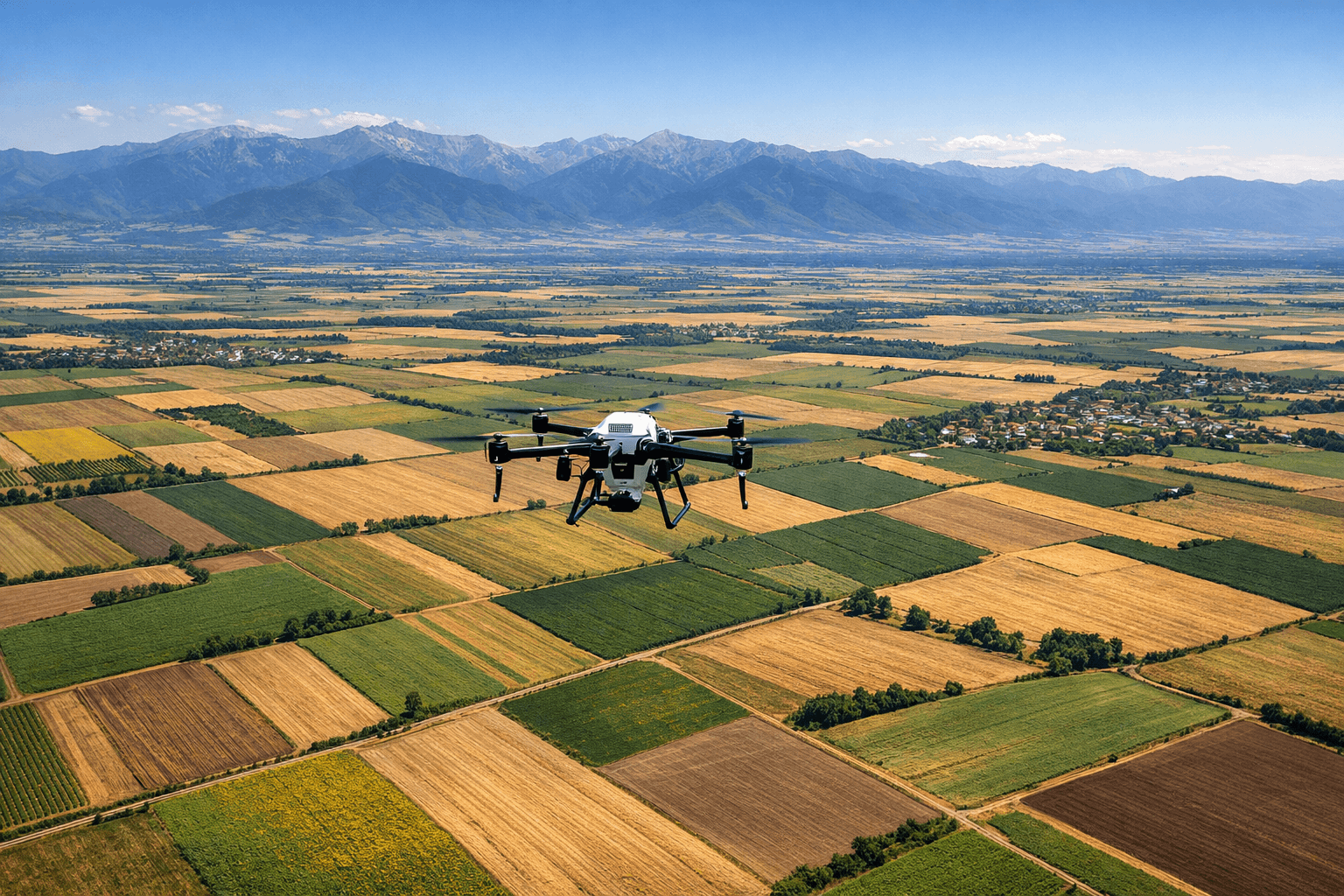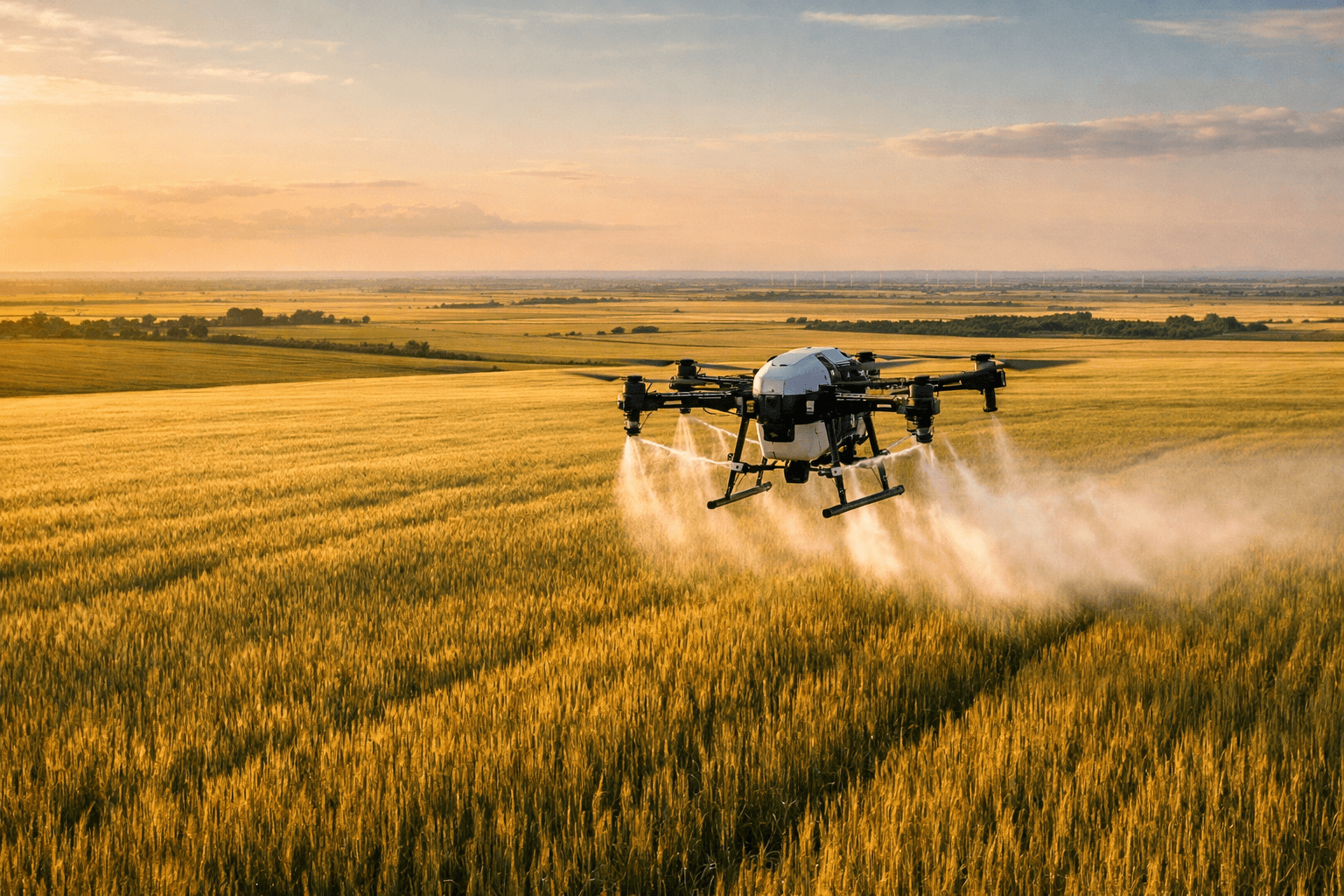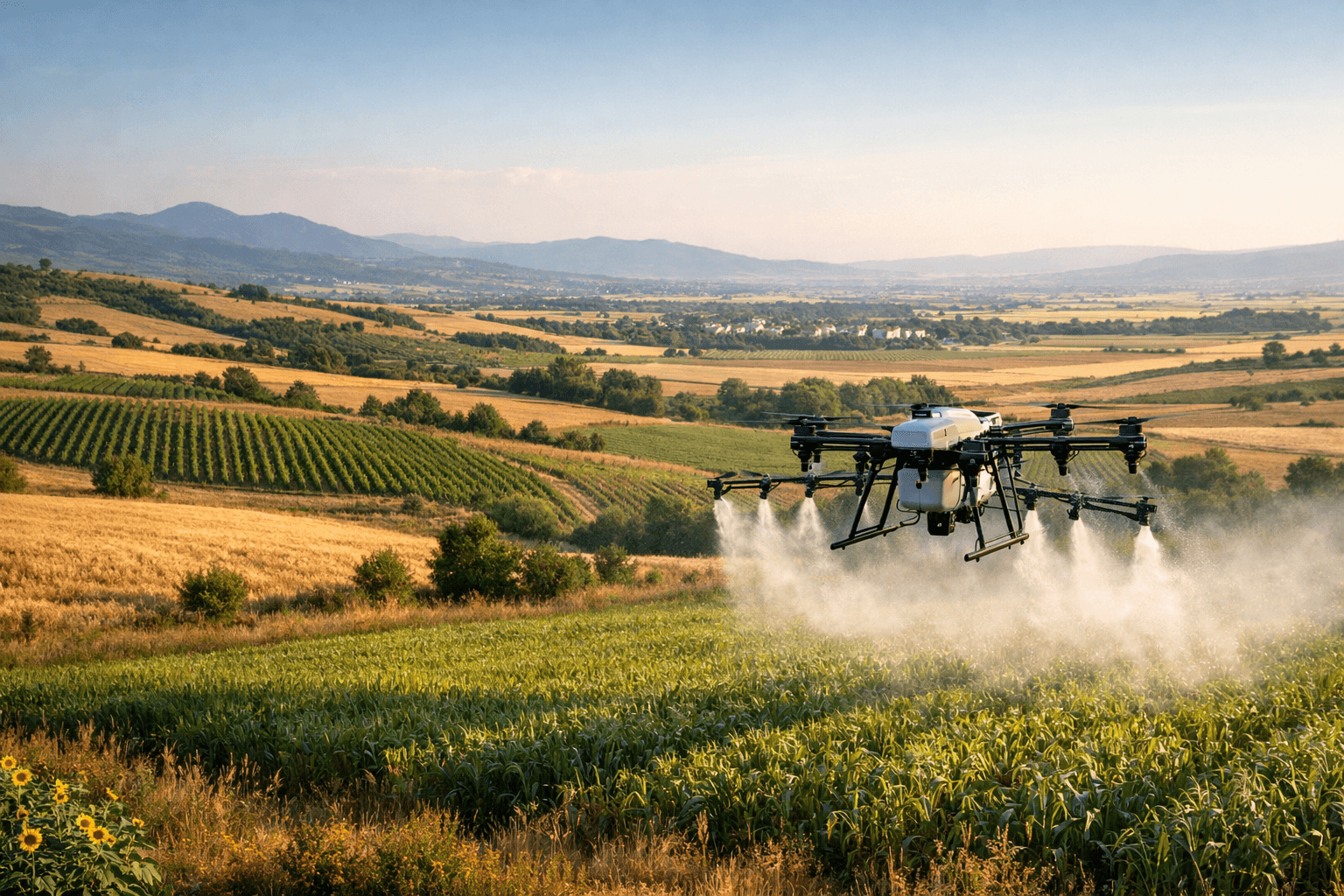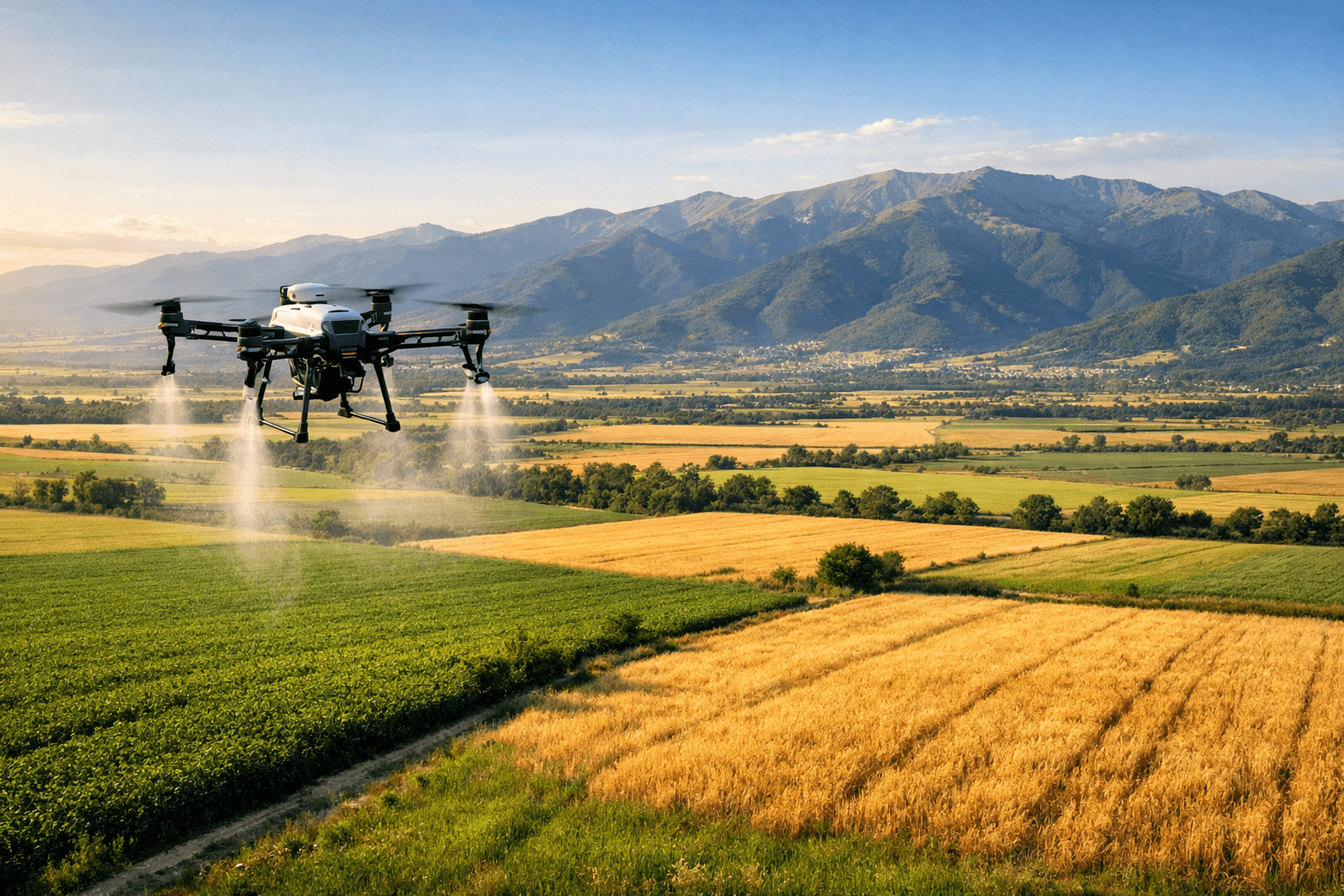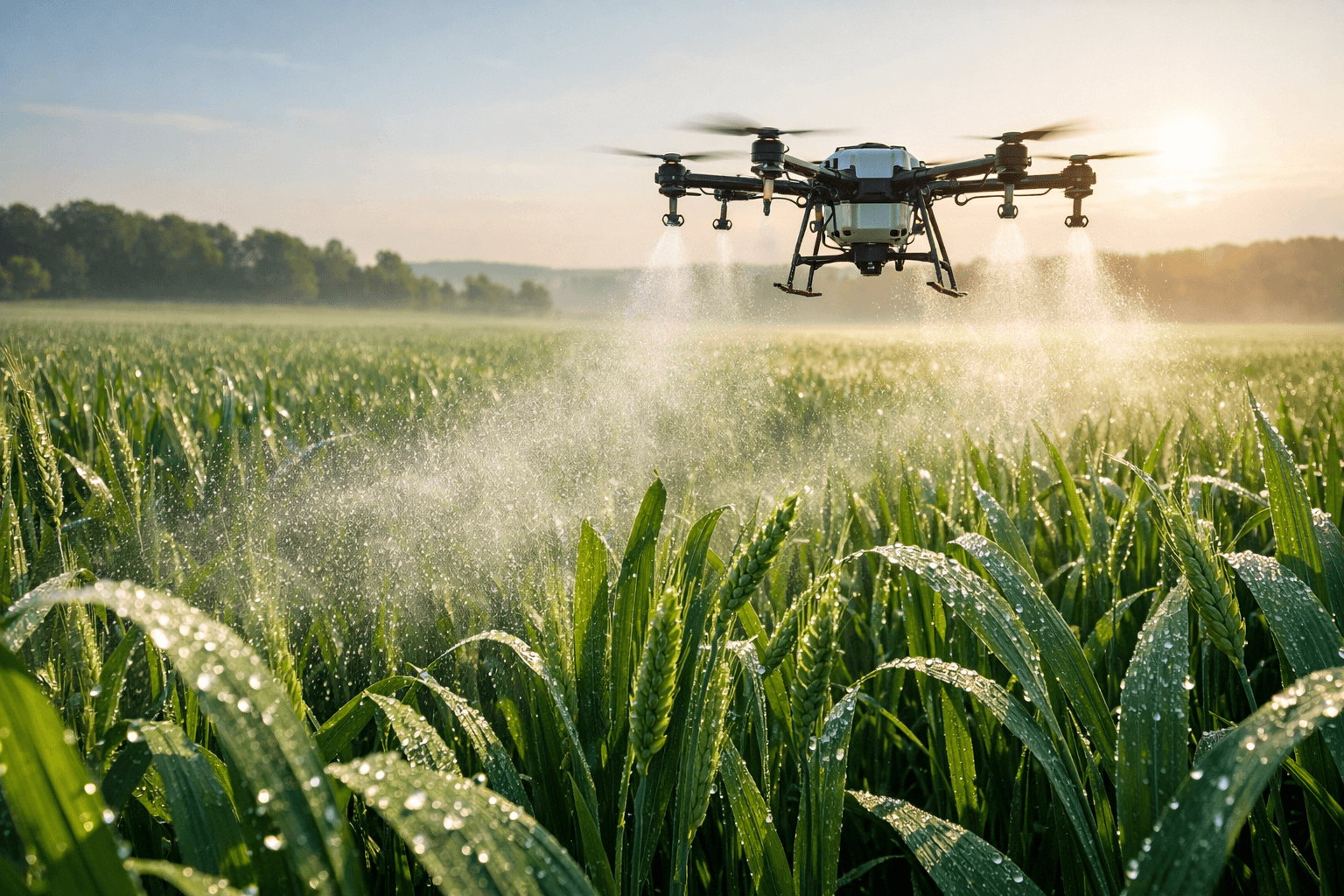
Foliar Fertilization of Wheat – Better Yields with Drone Technology
Foliar fertilization of wheat is an agrotechnical practice with a proven effect that allows fast and effective delivery of nutrients directly through the leaf surface. Unlike soil fertilization, where elements must dissolve in the soil solution and be taken up by the roots, foliar nutrition provides almost instantaneous absorption – hours instead of days.
In this article we will look at when and why wheat needs foliar fertilization, which microelements are critically important, how to choose appropriate products and why drone technology turns foliar nutrition into an exceptionally effective investment.
Why Foliar Fertilization Is Important for Wheat
Wheat is a crop with high nutrition requirements, especially regarding nitrogen, phosphorus and potassium. But besides macronutrients, yield and grain quality depend significantly on the availability of microelements – zinc, manganese, copper, boron, iron and molybdenum.
When Soil Fertilization Is Not Enough
In many situations nutrients are present in the soil but are not available to the plants:
- High soil pH (> 7.5) – carbonate soils, such as those widespread in the Thracian Plain (Plovdiv, Stara Zagora, Pazardzhik, Haskovo) and Dobrudzha, bind microelements (especially zinc, manganese and iron) in unavailable forms
- Cold spring conditions – at low temperatures root activity is reduced and element uptake from the soil is slowed
- Excess moisture or drought – both extremes hinder normal root nutrition
- Compacted soil – compaction limits root system development
In these cases foliar fertilization of wheat is not just a supplement – it is a necessity. It bypasses the limitations of soil nutrition and delivers elements directly where they are needed.
Effectiveness of Leaf Absorption
Scientific research shows that foliar application of microelements has significantly higher uptake efficiency compared to soil application:
- Zinc – 5 times more effective with foliar application
- Manganese – up to 10 times more effective with foliar application
- Iron – absorbed almost entirely with foliar application, while soil application can be practically useless on carbonate soils
These data show that foliar fertilization is not an extravagance but a sound investment with high return.
Key Microelements for Wheat
Zinc (Zn)
Zinc plays a key role in auxin synthesis (growth hormones), enzyme activity and photosynthesis. Zinc deficiency is the most widespread microelement deficiency in the world and is especially relevant on carbonate soils.
Symptoms of deficiency: Chlorosis (yellowing) between the veins of young leaves, stunted growth, shortened internodes, small and shrunken grain.
Recommended dose for foliar fertilization: 150–300 g/dka zinc sulphate (ZnSO₄·7H₂O) or equivalent chelate form (Zn-EDTA) at concentration 0.2–0.5%.
Manganese (Mn)
Manganese is indispensable for photosynthesis – it participates directly in the splitting of water molecules (photolysis). It is also important for plant resistance to diseases. Manganese deficiency is common at soil pH above 7.0 and light texture.
Symptoms of deficiency: Interveinal chlorosis of young leaves, sometimes with necrotic spots. Leaves become limp and drooping. Crops look pale green.
Recommended dose: 200–400 g/dka manganese sulphate (MnSO₄) or chelate form (Mn-EDTA). Usually 2–3 applications are made.
Copper (Cu)
Copper is important for pollen formation and fertilization. Copper deficiency directly affects spike fertility, leading to empty spikelets and sterility. Peaty and sandy soils are the poorest in copper.
Symptoms of deficiency: Whitening and curling of the tips of youngest leaves. In severe deficiency, spikes remain empty or partially sterile. Stalks may bend under the ear.
Recommended dose: 50–100 g/dka copper sulphate (CuSO₄·5H₂O) or Cu-EDTA at concentration up to 0.1% (higher concentrations can cause toxicity).
Boron (B)
Boron is linked to cell division, sugar transport and pollen formation. Its deficiency is rarer in wheat compared to rapeseed, but can appear on light sandy soils.
Symptoms of deficiency: Curling of youngest leaves, problems with flowering and fertilization, irregular ripening.
Recommended dose: 30–50 g/dka boric acid or sodium borate.
Optimal Timings for Foliar Fertilization of Wheat
Choosing the right moment for foliar fertilization of wheat is of critical importance for the effectiveness of the application.
First Application – Stem Elongation (BBCH 30–33)
The stem elongation phase is the ideal moment for the first foliar fertilization. Wheat is actively accumulating biomass, forming its stem nodes and needs intensive nutrition. In this period it is appropriate to apply zinc, manganese and nitrogen foliar fertilizers.
This is also the moment for the first fungicide treatment (T1), which means foliar fertilization can be combined with fungicide spraying in one pass – a significant saving of time and resources.
Second Application – Flag Leaf to Ear Emergence (BBCH 39–55)
The period from flag leaf appearance to ear emergence is the second critical moment for foliar fertilization. The flag leaf is the main photosynthetic organ that "feeds" the grain. Microelement nutrition in this period improves photosynthetic activity and extends the functional life of the leaves.
Suitable elements for the second application: manganese, copper, magnesium, potassium. Learn more about optimal timing for wheat spraying.
Third Application – Flowering and Early Grain Fill (BBCH 61–73)
If needed, a third application can be made with emphasis on potassium and boron for better fertilization and grain filling. This application can be combined with the T3 fungicide treatment.
Combining Foliar Fertilization with Pesticide Treatments
One of the greatest practical benefits of foliar fertilization is the possibility of mixing with pesticides in one working solution. Instead of making a separate pass for nutrition, foliar fertilizers are added to the fungicide or insecticide solution.
Compatibility Rules
- Always check physical and chemical compatibility of products before mixing
- Do not mix calcium and phosphorus products in one container (precipitate)
- Chelate forms of microelements are more compatible than sulphate forms
- Do a trial mixing in small volume to check for flocculation or precipitation
- Follow the addition order: first water, then foliar fertilizer, then pesticide, then adjuvant
Combining treatments is especially advantageous in drone spraying, as it reduces the number of passes and saves time.
Advantages of Drone Fertilization with DJI Agras T50
Drone technology introduces a qualitatively new dimension to foliar fertilization. Here are the specific advantages of the DJI Agras T50 for this operation.
Exceptionally Even Coverage
The DJI Agras T50 is equipped with six centrifugal nozzles and a powerful airflow from the rotors that "opens" the canopy and allows penetration of the solution to the lower leaves. RTK GPS navigation guarantees accuracy of ±10 cm on flight strips, meaning perfectly uniform application without gaps and overlaps.
For foliar fertilization, uniformity is critical – uneven application leads to zones with deficiency and zones with excess, both of which are undesirable.
Access at Any Time
Foliar fertilization must be performed in precisely defined development phases. A delay of even one week can significantly reduce the effect. With the DJI Agras T50 drone, the operation can be performed regardless of soil condition – wet, dry, cracked or waterlogged. You do not wait for conditions – you act in time.
No Compaction or Mechanical Damage
In the late phases of wheat (ear emergence, flowering) entry of ground machinery causes lodging and mechanical damage. The drone does not contact the stand and does not cause any losses.
Combining Operations
With the DJI Agras T50 you can combine foliar fertilization with fungicide spraying in one flight. This means double effectiveness on every pass – both protection and nutrition.
High-Productivity Work
With productivity of over 200 decares per hour, the DJI Agras T50 enables foliar fertilization of large areas within a single working day. This is decisive when the optimal period for fertilization is short.
See the full range of drone spraying services that AirAgro offers.
Practical Tips for Foliar Fertilization
Spray Under Suitable Conditions
Optimal conditions for foliar fertilization are:
- Temperature between 15 and 25 °C
- Without direct strong sunlight (early morning or evening)
- Relative humidity above 50–60%
- No wind above 4 m/s
- No expected rain in the next 2–4 hours
Choose the Right Fertilizer Form
Chelate forms (EDTA, EDDHA, amino acid chelates) are significantly more effective than sulphate forms for foliar application. They are absorbed faster, do not cause burns and are more compatible with pesticides. Although more expensive, their higher effectiveness justifies the investment.
Do Not Overdo the Concentration
Excessively concentrated solutions cause leaf burns, especially in hot weather. With drone spraying, where water volume is 1–2 L/dka, adjust concentration to the reduced volume. Consult an agronomist or the AirAgro team for correct doses for drone application.
Carry Out a Soil Analysis
Foliar fertilization should not be "blind". Carry out a soil and/or leaf analysis to determine real deficits. This way you will apply exactly the elements that the wheat actually needs.
Take the Growth Stage into Account
Different elements are most needed in different phases:
- Tillering to stem elongation: zinc, manganese, nitrogen
- Flag leaf to ear emergence: manganese, copper, magnesium
- Flowering to grain fill: potassium, boron
Economic Effectiveness of Foliar Fertilization
The investment in foliar fertilization of wheat is one of the most profitable in crop farming. At a cost of 5–15 BGN/dka for foliar fertilizers, the yield increase is typically from 30 to 80 kg/dka of grain, which at current wheat prices represents a multi-fold return.
Besides a quantitative effect, foliar fertilization also improves grain quality – higher protein content, better hectolitre weight and better bread-making qualities. This can secure a higher purchase price.
Frequently Asked Questions
When is the best moment for foliar fertilization of wheat?
The three optimal phases are: stem elongation (BBCH 30–33) for zinc, manganese and nitrogen; flag leaf to ear emergence (BBCH 39–55) for manganese, copper and magnesium; and flowering to early grain fill (BBCH 61–73) for potassium and boron. The first and second applications have the greatest impact on yield.
Which microelements are most important for wheat?
Zinc, manganese and copper are the three most critical microelements. Zinc participates in photosynthesis and growth hormones, manganese is key for photolysis of water, and copper determines spike fertility. On carbonate soils in the Thracian Plain and Dobrudzha these elements are often in unavailable forms.
Can foliar fertilization replace soil fertilization?
No, foliar fertilization is a supplement, not a substitute for soil nutrition. It is especially effective for microelements and for quickly correcting deficiencies in critical phases, but macronutrients (nitrogen, phosphorus, potassium) must be supplied mainly through the soil.
With which products can foliar fertilization be combined?
Foliar fertilizers can be mixed with fungicides and insecticides with verified compatibility. Chelate forms of microelements are more compatible than sulphate forms. When fungicide spraying of wheat, combining with foliar fertilization saves a pass and time.
How many litres of solution per decare are needed for foliar fertilization with a drone?
With drone spraying using the DJI Agras T50 the water volume is 1–2 L/dka. Although significantly less than ground spraying, the special centrifugal nozzles create fine droplets with excellent coverage. Concentrations are adjusted relative to the reduced volume – consult the AirAgro team for exact doses.
Conclusion
Foliar fertilization of wheat is a proven effective practice that complements basic soil fertilization and supplies critically important microelements in key development phases. With drone technology of the DJI Agras T50, foliar nutrition becomes more uniform, more timely and more effective than ever.
📞 Request a free consultation for foliar fertilization of your wheat crops. The AirAgro team offers:
- Free farm inspection and soil/foliar analysis to determine deficiencies
- Drone demonstration of the DJI Agras T50 for foliar fertilization on your field
- Personalised treatment plan with microelement selection and optimal phases
We serve farms in the Thracian Plain (Plovdiv, Stara Zagora, Pazardzhik, Haskovo), Dobrudzha and all of Bulgaria. Contact us at airagro.bg or call us – invest in proper nutrition, the yields will reward you!