When to Spray Wheat – Complete Calendar and Recommendations
The question when to spray wheat is among the most frequently asked by agricultural producers every year. And for good reason – the correct treatment timing is half the battle. Spraying at the wrong moment not only has no effect, but can harm the crop, increase costs and reduce yield. In this article you will find a complete calendar for wheat spraying by growth stage, with specific recommendations for herbicides, fungicides, insecticides and foliar fertilisation, adapted for Bulgarian climatic conditions.
Why Spraying Timing Is So Important
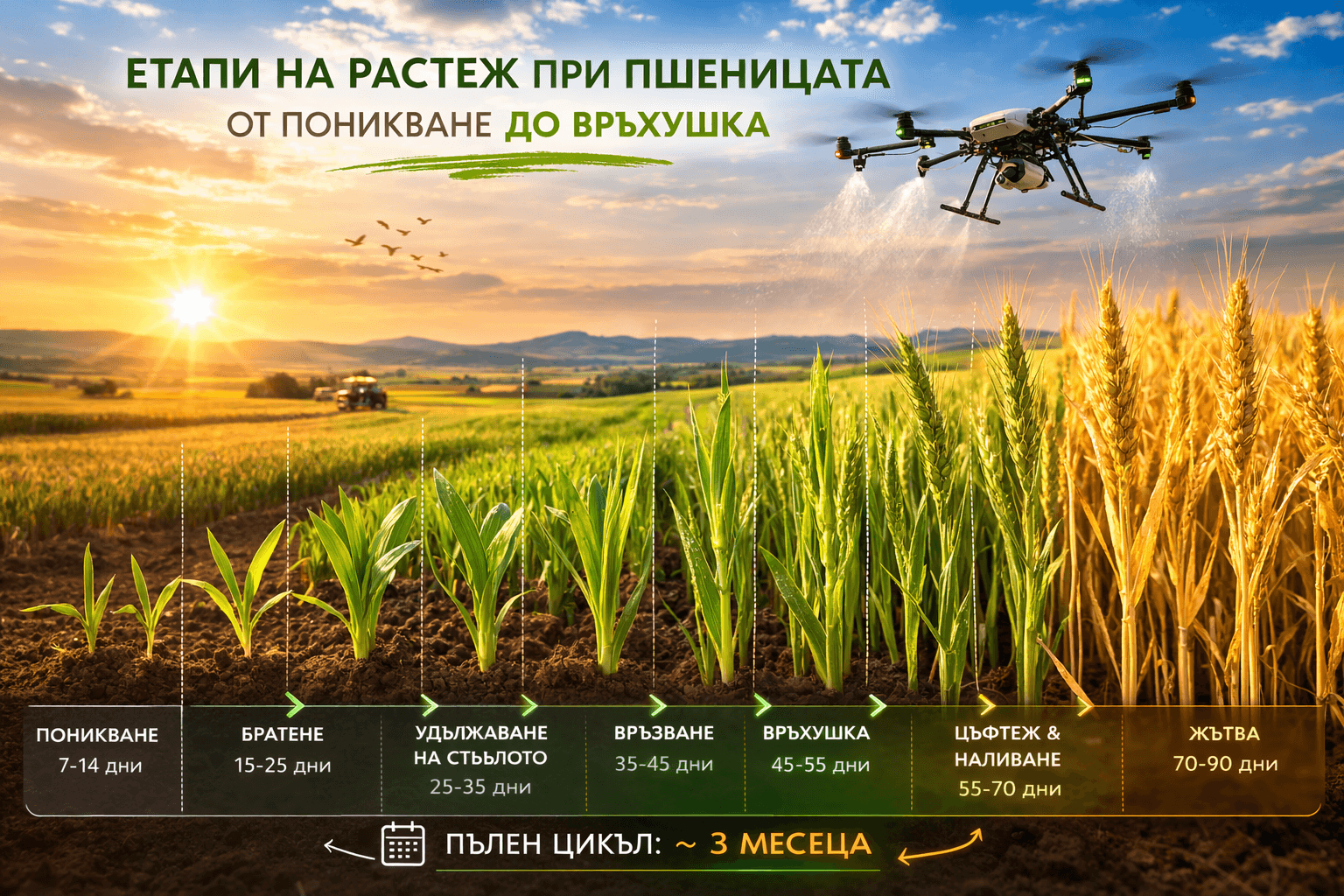
Wheat passes through clearly defined growth stages – from emergence and tillering, through stem elongation and ear emergence, to flowering and grain filling. Each stage is vulnerable to different pests and diseases. At the same time each stage has different sensitivity to the preparations themselves.
Spraying with herbicide during stem elongation, for example, can cause phytotoxicity and ear deformation. A fungicide treatment performed too early will not protect the flag leaf – the most important for photosynthesis. Therefore the correct timing is of key importance.
Climatic conditions in Bulgaria also play a role. Spring in the Thracian Plain – the areas around Plovdiv, Stara Zagora, Pazardzhik and Haskovo – arrives 2–3 weeks earlier compared to Dobrudzha or Northwestern Bulgaria. This means the calendar must be adapted to the specific region and year. Farmers in Southern Bulgaria typically begin herbicide treatments as early as mid-February, while in Dobrudzha the optimal window only opens at the beginning of March.
Wheat Growth Stages and When to Spray
Tillering Stage (BBCH 21–29) – February to early April
Tillering is the critical window for herbicide treatment of wheat. In this stage weeds are in early phases and are most sensitive to herbicides, while the wheat itself is sufficiently hardy.
What is done:
- Herbicide spraying against broad-leaved weeds (chamomile, poppy, speedwell, charlock)
- Herbicide spraying against grass weeds (wild oat, ryegrass, loose silky-bent)
- First foliar fertilisation (if needed)
Optimal temperature: above 5–8 °C daytime temperature. Avoid treatment with a forecast of night frosts.
For more information on weed control, see our detailed article on weed control in wheat.
Stem Elongation Stage (BBCH 30–39) – April
Stem elongation is a transition period. Herbicides are not recommended anymore, unless specifically registered for later application. In this stage the focus shifts to fungicide protection and foliar fertilisation.
What is done:
- First fungicide treatment (when symptoms appear or in rainy conditions)
- Foliar fertilisation with nitrogen and microelements
- Observation for leaf diseases – powdery mildew, rusts, septoria
Early fungicide treatment (BBCH 31–32) is especially important for varieties susceptible to septoria. If the climate is wet and temperatures are moderate, infection pressure builds rapidly.
Learn more about fungicide spraying of wheat and the choice of the right product.
Flag Leaf Emergence and Ear Emergence (BBCH 37–59) – late April to mid-May
This is the most important moment for fungicide protection. The flag leaf provides up to 45% of the photosynthesis that fills the grain. Protecting it is directly linked to yield.
What is done:
- Second (main) fungicide treatment – flag leaf protection
- Foliar fertilisation (boosting before flowering)
- Insecticide treatment when grain bug or aphids appear
Fungicide selection: Combined products with triazole + strobilurin components provide broad spectrum and prolonged action. With strong rust pressure, specialised triazole fungicides are recommended.
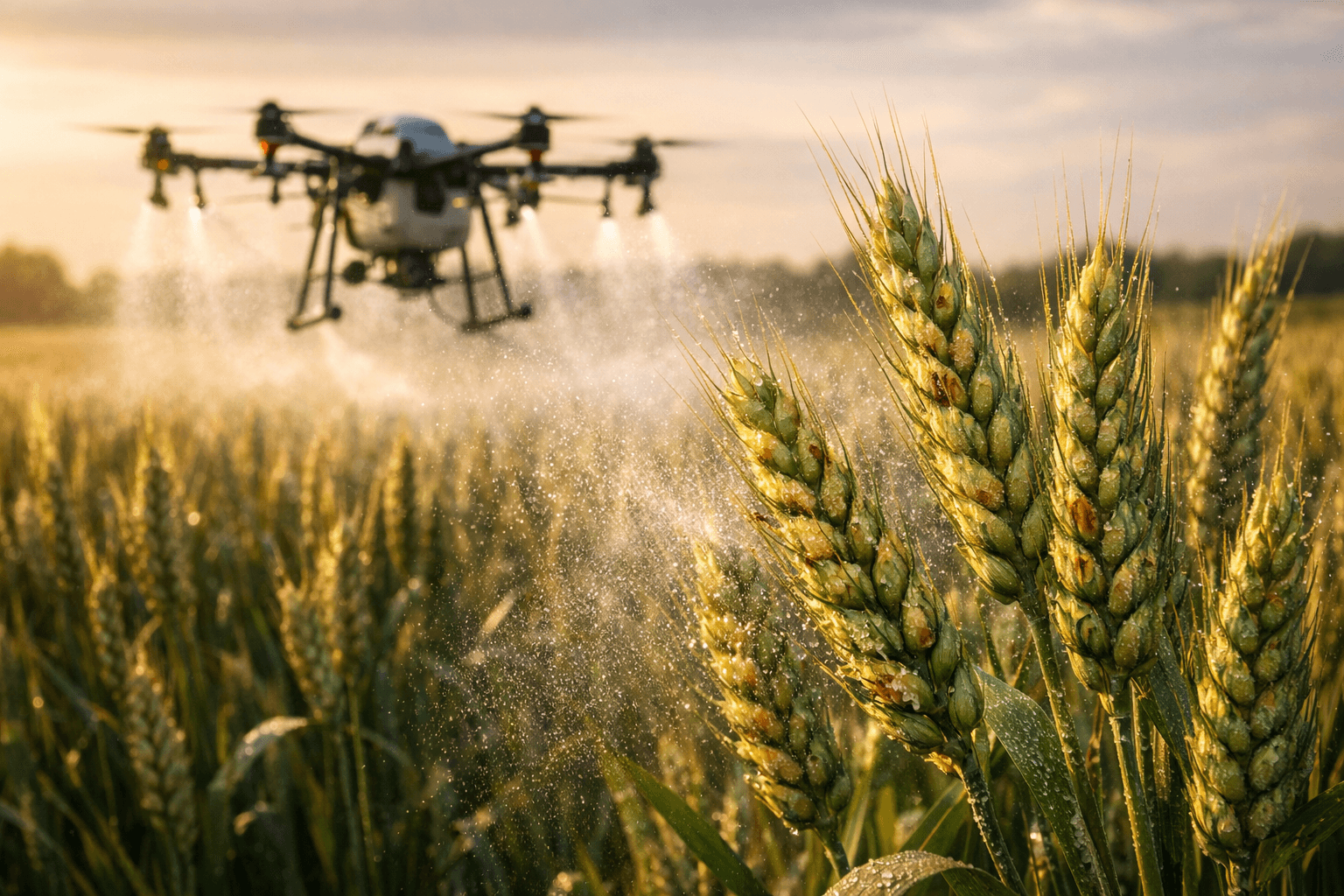
This is the time when treatment precision is decisive. More about wheat drone spraying and the advantages of precision application.
Flowering Stage (BBCH 61–69) – May
Flowering is a critical stage for control of fusarium head blight (Fusarium Head Blight). This disease not only reduces yield but also contaminates grain with mycotoxins (DON, zearalenone), which can render it unfit for food or feed.
What is done:
- Fungicide treatment against fusarium (in wet weather during flowering)
- Insecticide treatment if needed (grain bug)
Optimal timing: at the beginning of flowering (BBCH 61–65). Treatment must be carried out within 24–48 hours of a rainy period, when infection risk is highest.
Grain Filling Stage (BBCH 70–89) – June
In this stage chemical treatment is rarely justified. The leaf mass decreases and the crop completes its growing season. In case of extremely strong grain bug attack, insecticide spraying may be necessary, but this is more the exception.
What is done:
- Desiccation (if needed, before harvest)
- Monitoring for grain bug
Foliar Fertilisation of Wheat – When and What
Foliar fertilisation is a supplement to basic and pre-sowing fertilisation, not its replacement. It is especially effective when:
- Spring is cold and root uptake is impaired
- Light and sandy soils with rapid nutrient leaching
- Visible nutrient deficiency
Optimal stages for foliar fertilisation:
- Tillering (BBCH 25–29) – nitrogen foliar fertilisation
- Stem elongation (BBCH 31–37) – nitrogen + microelements (manganese, copper, zinc)
- Before ear emergence (BBCH 39–49) – potassium, boron + amino acids
Learn more about techniques for foliar fertilisation of wheat and how to choose the right product.
Practical Wheat Spraying Calendar for Bulgaria
| Period | Growth stage (BBCH) | Treatment | Priority | | ---------------- | --------------------------------- | ------------------------------------ | ------------------------ | | February – March | Tillering (21–29) | Herbicides, foliar fertilisation | High | | April | Stem elongation (30–37) | Fungicide No.1, foliar fertilisation | Medium–high | | Late April – May | Flag leaf – ear emergence (37–59) | Fungicide No.2 (main), insecticides | Very high | | May | Flowering (61–69) | Fungicide against fusarium | High (in wet conditions) | | June | Grain filling (70–89) | Desiccation (if needed) | Low |
Note: Timing is indicative. In the Thracian Plain (Plovdiv, Pazardzhik, Stara Zagora, Haskovo) growth stages occur 2–3 weeks earlier compared to Dobrudzha and Northern Bulgaria.
How the Drone Improves Wheat Spraying
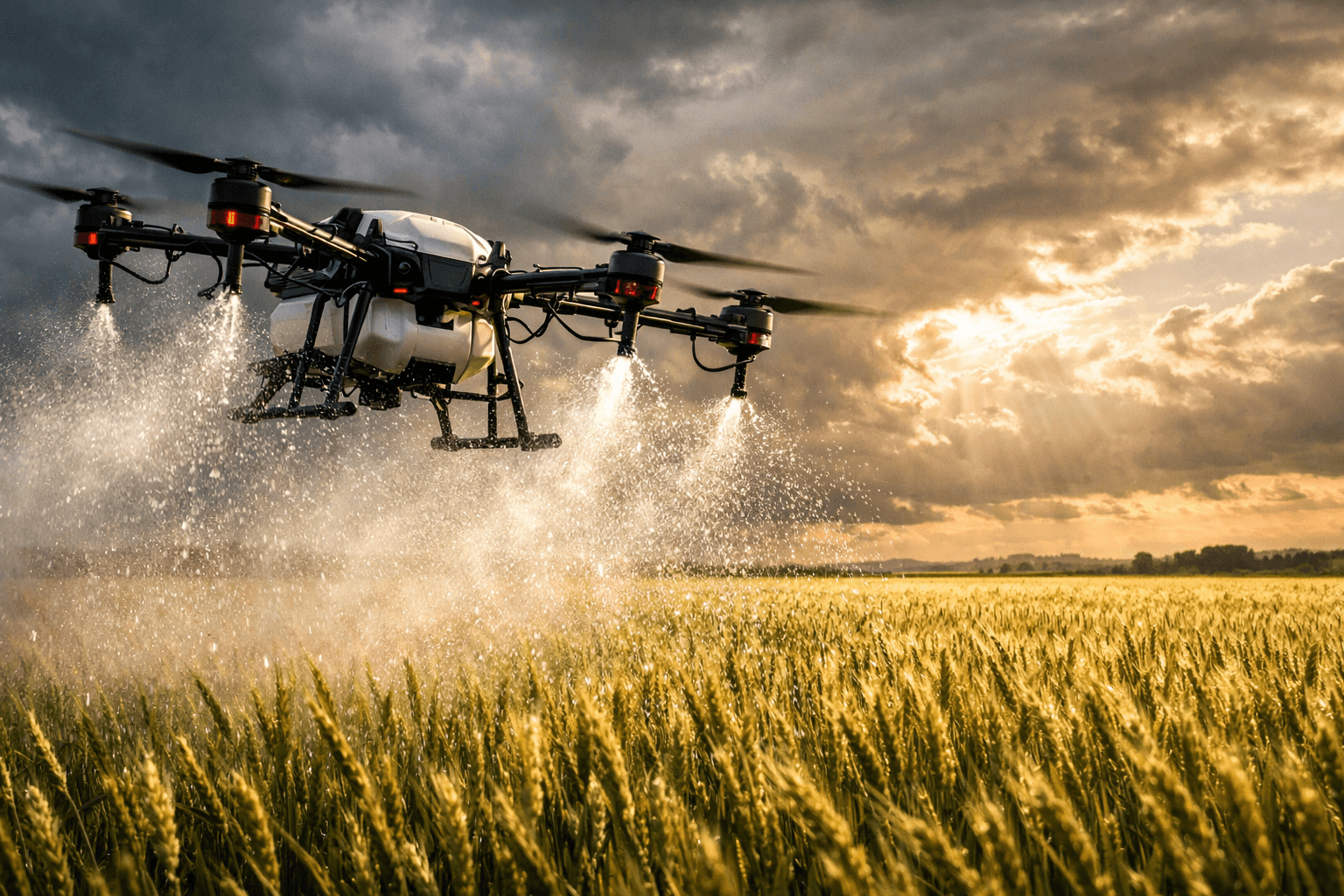
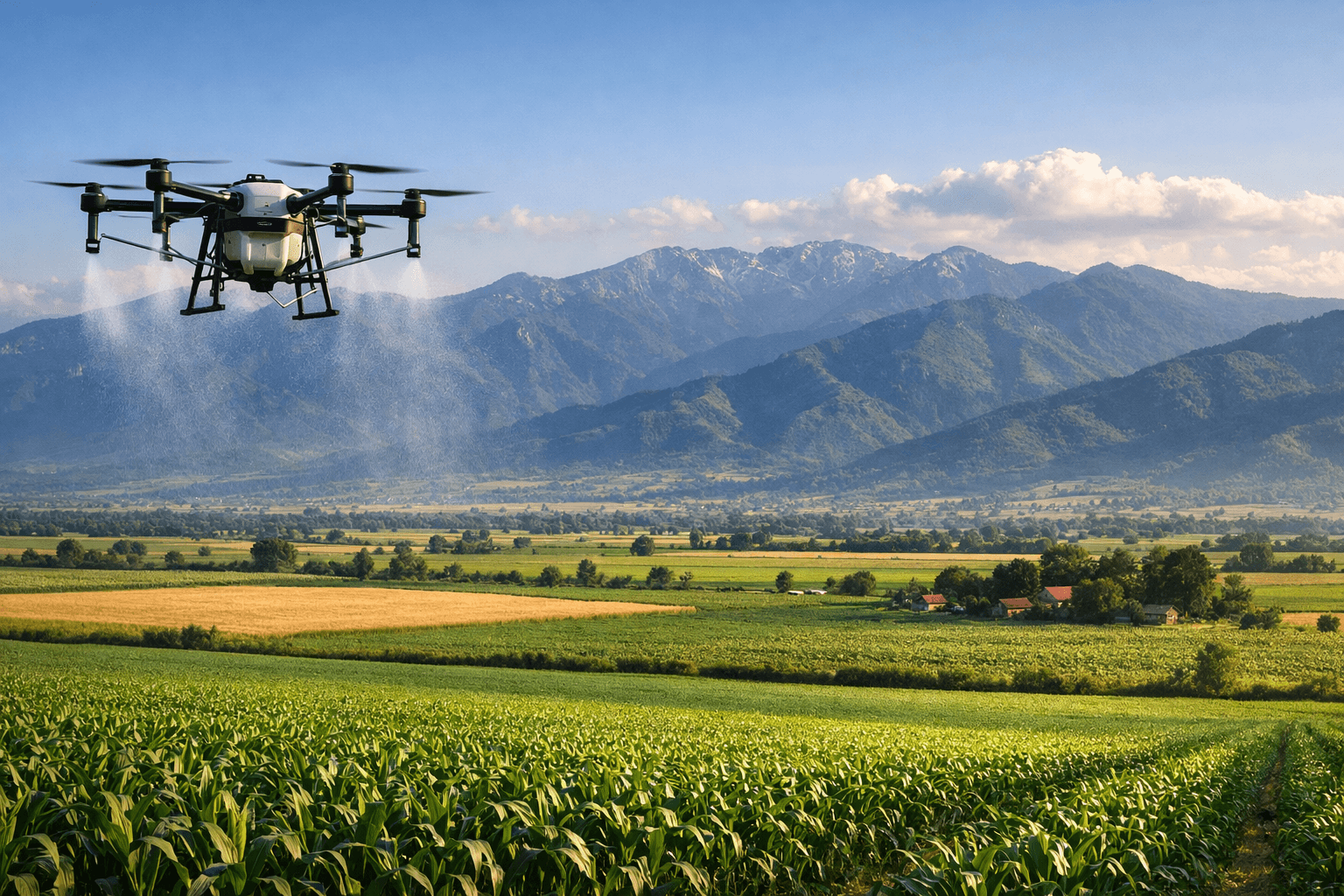
The correct timing is only one half of the equation. The other is application quality. This is precisely where modern technologies like the DJI Agras T50 drone make the difference.
Precision Application at the Right Moment
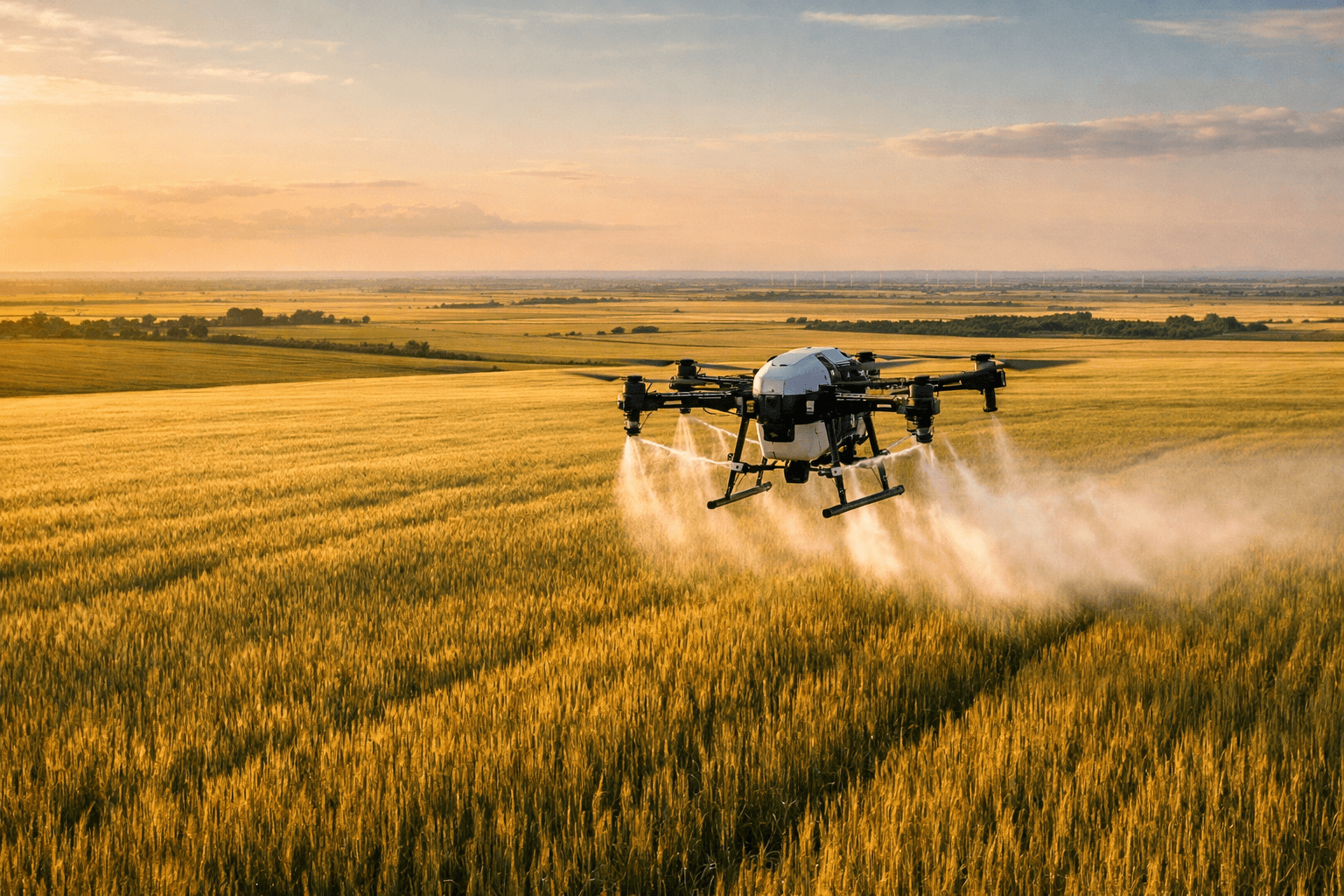
The drone can take off and treat the area within hours, even when the field is wet and machinery cannot enter. This is exceptionally important for fungicide treatment during flowering, where every day's delay increases the risk of fusarium.
No Crop Trampling
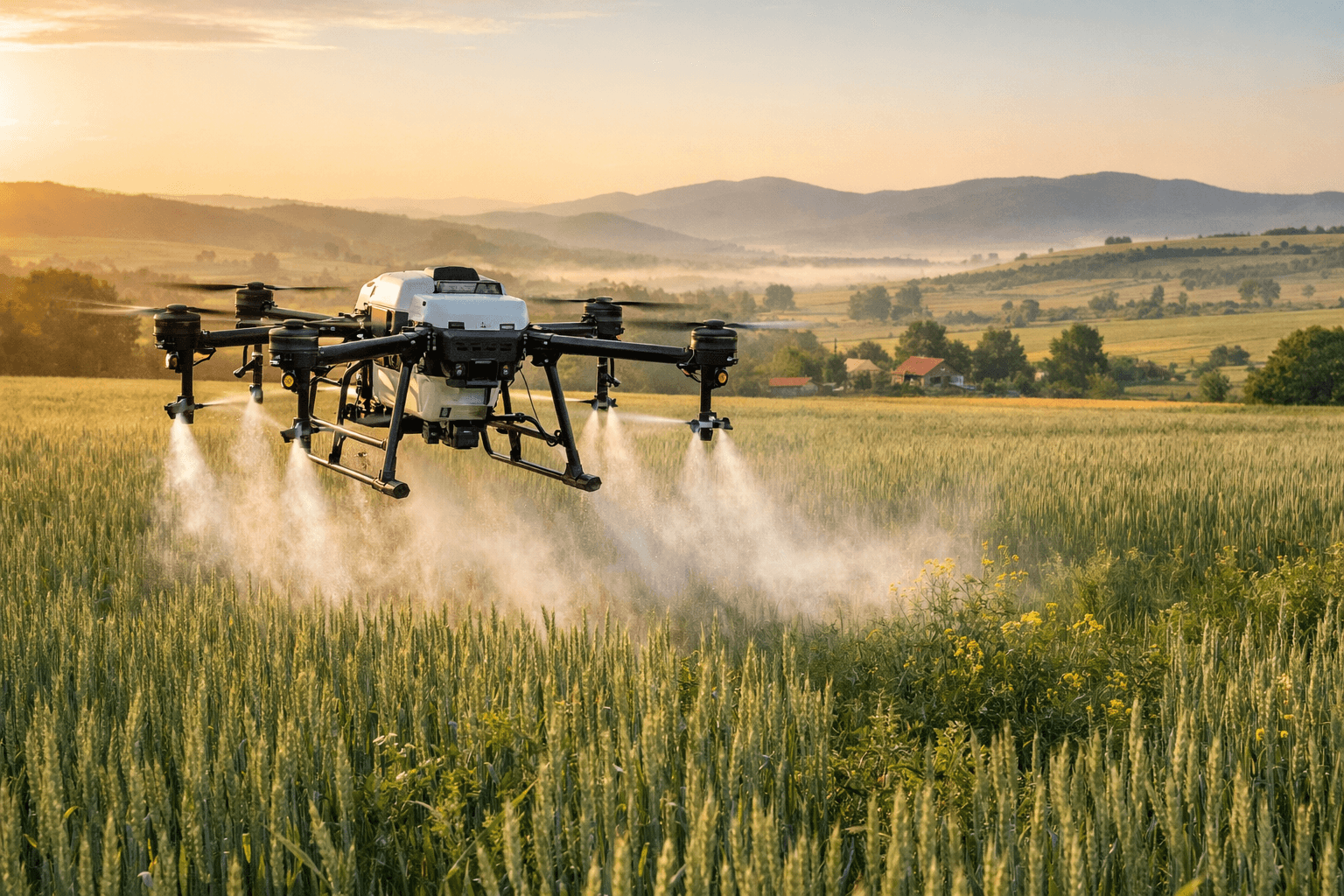
Ground machinery creates tracks and compacts soil, destroying up to 5–8% of plants in the tyre paths. The drone works at 2–3 metres above the crop and does not touch the stand.
Uniform Coverage
The DJI Agras T50 is equipped with centrifugal nozzles and an intelligent flow control system that adjusts relative to speed. The result is uniform coverage without overlap and without gaps, meaning better preparation effect at a lower dose.
Water and Preparation Savings
The drone works at ultra-low volumes (ULV) – 1–3 litres of solution per decare, instead of 15–30 litres with ground spraying. The concentrated solution provides the same or better coverage with less water consumption.
See the full list of drone spraying services we offer.
Common Mistakes in Wheat Spraying
-
Spraying in wind above 4 m/s – leads to droplet drift and uneven coverage. Drones have built-in wind sensors and alert the operator.
-
Mixing incompatible products – always check preparation compatibility before tank mixing.
-
Skipping fungicide protection of the flag leaf – this is the most expensive mistake, because it directly reduces yield.
-
Herbicide treatment too late – weeds have already competed with wheat and the herbicide does not recover the lost potential.
-
Incorrect sprayer calibration – leads to overdosing or underdosing. With drones, calibration is automatic and digitally controlled.
Frequently Asked Questions
Can wheat be sprayed at temperatures below 5 °C? Most herbicides require a minimum of 5–8 °C for effective action. At lower temperatures weed metabolism is slowed and the effect is incomplete.
How many times should wheat be sprayed per season? A typical programme includes 2–4 treatments: herbicide (1), fungicide (1–2) and insecticide (if needed). Each can be combined with foliar fertilisation.
Is drone spraying cost-effective? Yes. The drone saves up to 30% on preparation and water consumption, does not trample the stand and can work in conditions when ground machinery is inapplicable. More about drone spraying prices.
Conclusion
The wheat spraying calendar is a tool every farm manager should know and adapt to their own conditions. The key moments are herbicide treatment during tillering, fungicide protection of the flag leaf and fusarium control during flowering. When these treatments are carried out on time and with sufficient precision, yield can increase by 15–25%.
The AirAgro team uses DJI Agras T50 drones to provide fast, precise and effective treatment of your wheat areas – without trampling and without compromises on quality.
📞 Request a free consultation and receive an individual treatment plan for your wheat areas. The AirAgro team offers:
- Free farm inspection and phytosanitary condition assessment
- Drone demonstration of the DJI Agras T50 directly on your field
- Personalised treatment plan adapted to the growth stage and conditions in your area
We serve farms in the Thracian Plain, Dobrudzha and all of Bulgaria. Contact us at airagro.bg or call us to plan spraying for the season. Timely protection is the best investment in your yield!