When to Spray Sunflower – Optimal Timing and Methods
When to spray sunflower is a question with a specific and timely answer, because the treatment windows for this crop are narrow and missing them is costly. Bulgaria is one of the leading sunflower producers in the European Union, with the crop occupying over 800,000 hectares annually. At such a scale, proper crop protection is not just a recommendation – it is a necessity for profitable production.
In this article we will examine in detail the optimal timings for spraying sunflower – from pre-emergence herbicides to fungicide protection in advanced phases, with specific recommendations for Bulgarian conditions.
Why Spraying Timing Is Critical for Sunflower
Sunflower is a crop with relatively slow initial development. During the first 3–4 weeks after emergence the plants are low and cannot compete with weeds. At the same time sunflower is sensitive to phytotoxicity from herbicides in certain phases. Therefore precise adherence to timings is of decisive importance.
For fungicides the situation is similar – Sclerotinia and Phomopsis attack in specific periods of development, and treatment outside these periods is ineffective.
Pre-Emergence (Soil) Herbicide Treatment
When Is It Done
Soil herbicides are applied immediately after sowing, before emergence of the sunflower and weeds. Usually this is in the period April – beginning of May for most regions in Bulgaria.
What Is Used
- Acetochlor, S-metolachlor, pendimethalin – against grass and some broad-leaved weeds
- Flurochloridone – broad spectrum of action
Conditions for Effectiveness
Soil herbicides require moisture in the upper soil layer to form a herbicidal barrier. In a dry spring their effectiveness drops sharply. This is precisely why in drought years many farmers switch to post-emergence herbicides.
Important: Uniform application is critical – gaps in coverage mean strips with weeds. This is one of the cases where the drone has advantages over the tractor – even coverage without ruts.
Post-Emergence Herbicide Treatment
Conventional (Classical) Sunflower
With conventional hybrids the opportunities for post-emergence treatment are limited. Sunflower is a broad-leaved crop and most broad-leaved herbicides damage it.
What can be applied:
- Graminicide (anti-grass) herbicides – against wild oat, barnyard grass, panic grass species
- Inter-row cultivation – mechanical control
Optimal phase: BBCH 12–16 (2–6 true leaves of sunflower)
Clearfield and ExpressSun Hybrids
The situation is completely different with resistant hybrids:
Clearfield (IMI-resistant):
- Herbicide: imazamox-based products
- Phase: BBCH 12–18 (2–8 leaves)
- Controls broad-leaved AND grass weeds
ExpressSun (SU-resistant):
- Herbicide: tribenuron-methyl
- Phase: BBCH 12–16 (2–6 leaves)
- Mainly against broad-leaved weeds
The optimal time for post-emergence treatment is when weeds are at the 2–4 leaf stage and the sunflower is well-rooted. This is usually 10–20 days after emergence.
Fungicide Treatment of Sunflower
Main Diseases in Bulgaria
The two most dangerous diseases in sunflower in our conditions are:
-
White rot (Sclerotinia sclerotiorum) – attacks the stalk and capitulum, causes losses up to 30–50% under favourable conditions.
-
Phomopsis/Stem canker (Diaporthe helianthi) – causes necroses on stalks and can lead to plant breakage.
Additionally: grey rot (Botrytis) and Alternaria can also be a problem in wet years.
When to Apply Fungicide on Sunflower
First fungicide treatment:
- Phase BBCH 51–55 (beginning of bud formation)
- Usually end of June – beginning of July
- Target: protection against Phomopsis and early Sclerotinia
Second fungicide treatment:
- Phase BBCH 61–65 (beginning of flowering)
- Usually July
- Target: protection of the capitulum against Sclerotinia and grey rot
In wet and warm summers (increasingly common in Bulgaria) the second treatment is mandatory. Without it, Sclerotinia losses can be catastrophic.
Why the Drone Is the Ideal Solution for Fungicide Spraying
At the time of fungicide treatment sunflower is 120–180 cm tall. Ground machinery at this stage:
- Breaks plants when entering the stand
- Does not provide adequate coverage of the upper part of the capitulum
- Creates ruts in wet soil (and fungicides are most often applied in wet weather)
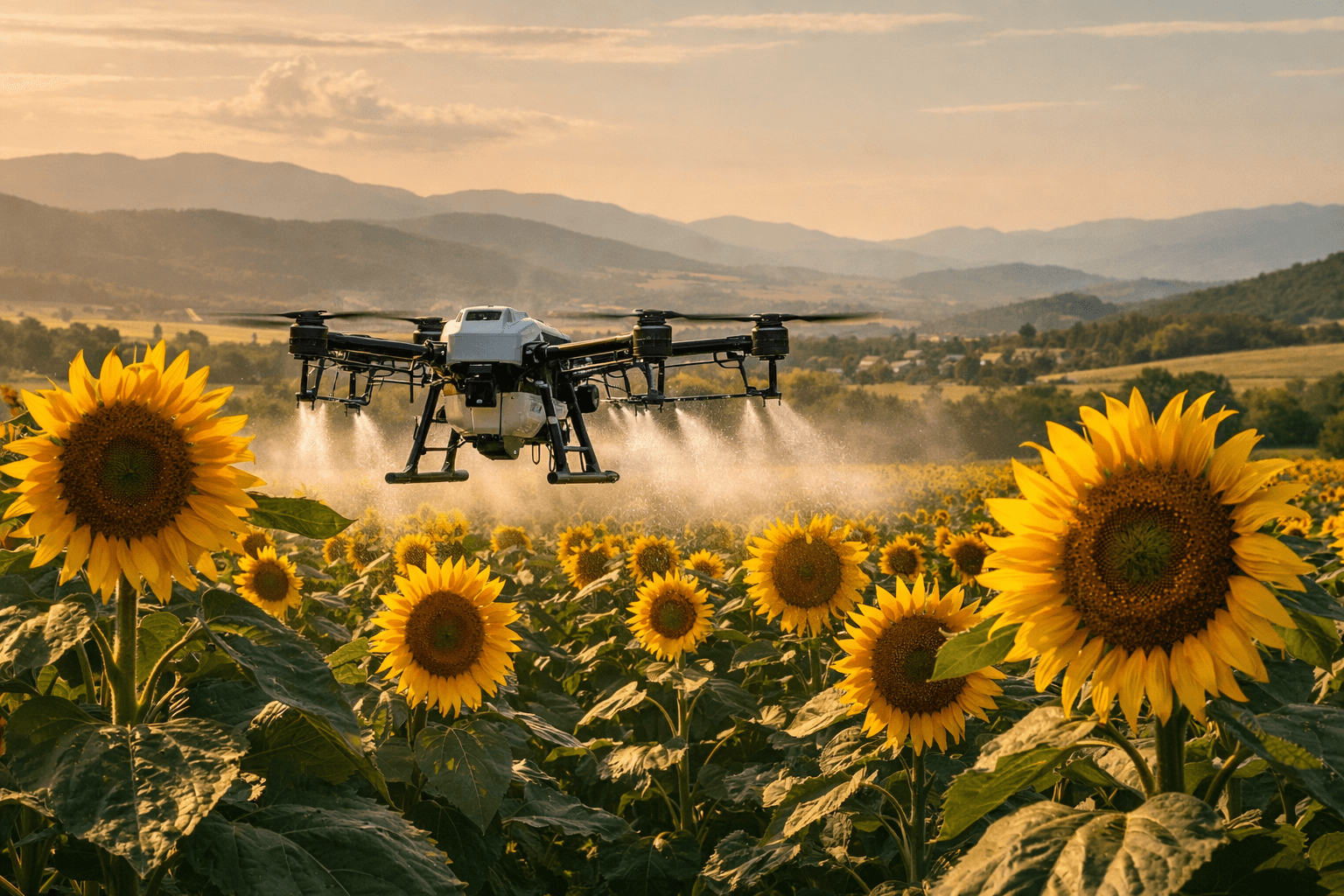
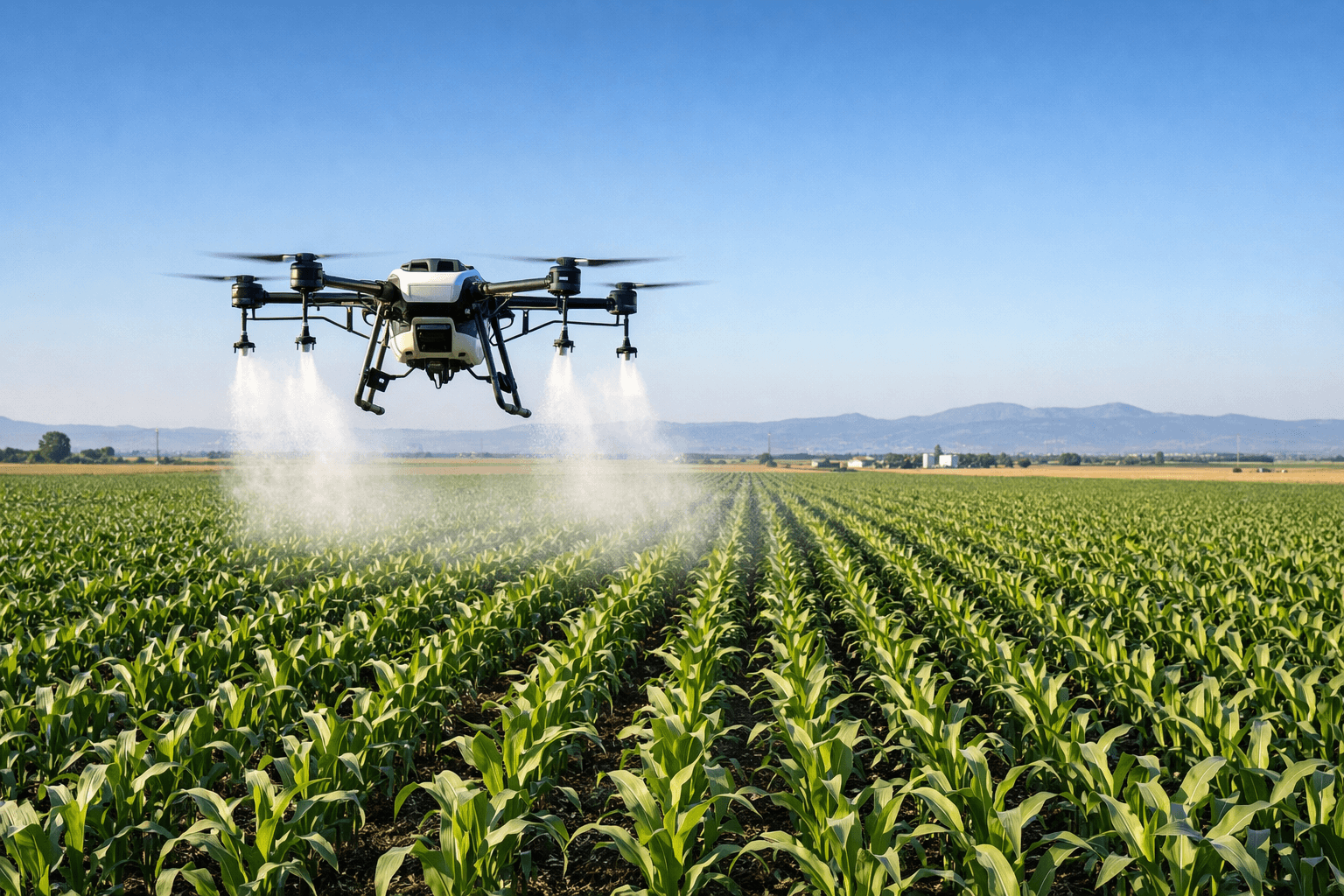
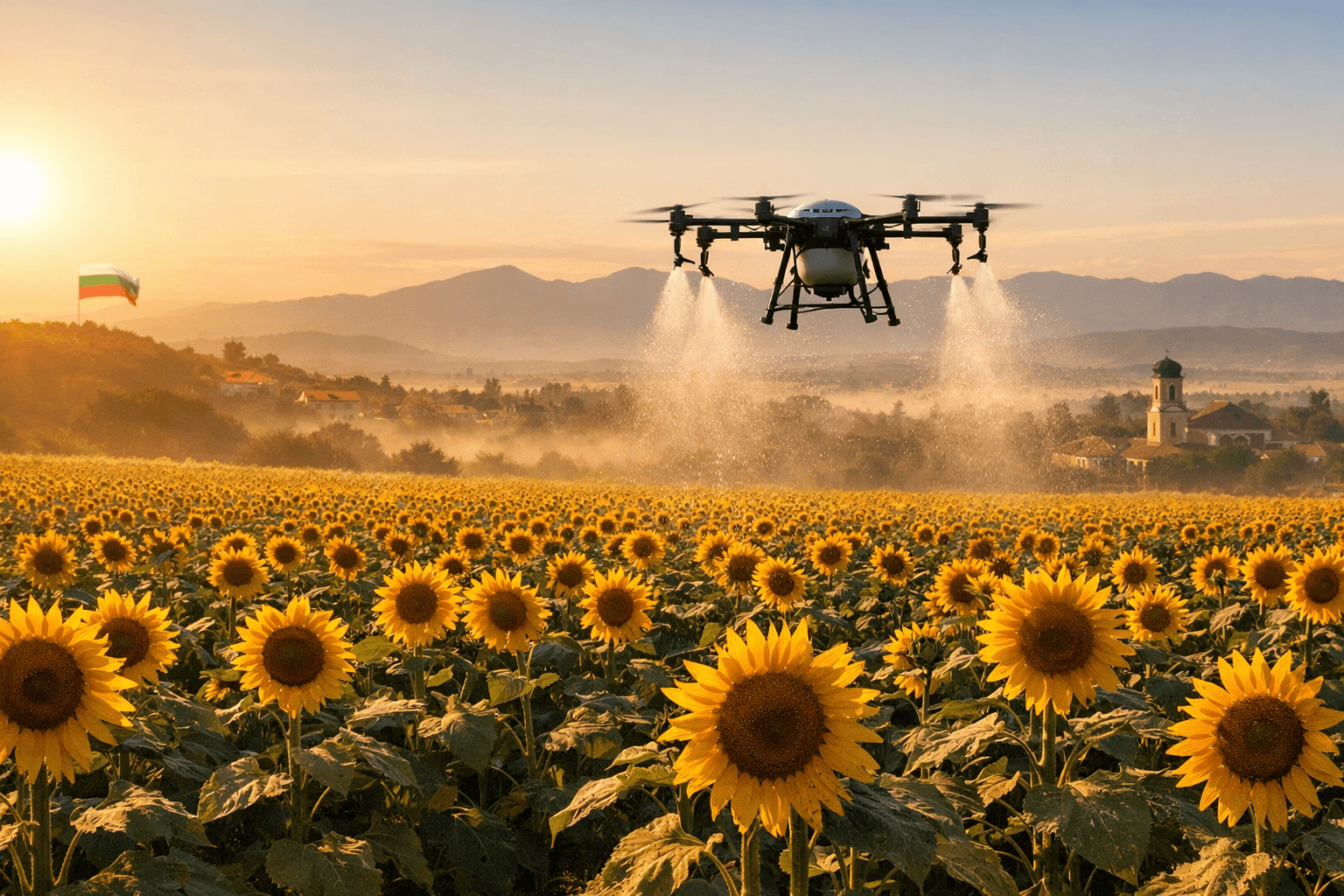
The DJI Agras T50 drone flies at 2–3 metres above the stand and applies the preparation from above, directly onto the capitula and upper leaves – exactly where protection is most needed. Learn more about sunflower drone spraying.
Insecticide Treatment
Main Pests
- Wireworms – soil pests, controlled with seed treatment
- Sunflower moth (Homoeosoma nebulella) – caterpillars damage seeds in the capitulum
- Aphids – transmit viral diseases
When to Apply Insecticide
- Against sunflower moth: during mass adult flight, usually July. Economic threshold determined with pheromone traps.
- Against aphids: when reaching threshold of 10–15% infested plants.
Insecticide spraying of a tall stand is yet another situation where the drone becomes the only practical solution without mechanical crop damage.
Practical Sunflower Spraying Calendar for Bulgaria
| Period | Treatment | Product/Type | Priority | | -------------------- | ------------------------ | ------------------------------------- | ----------------------------- | | April (after sowing) | Soil herbicide | Acetochlor, S-metolachlor | High | | May (2–6 leaves) | Post-emergence herbicide | IMI/SU herbicides (resistant hybrids) | High | | End of June | Fungicide No.1 | Against Phomopsis/Sclerotinia | Medium–high | | July (flowering) | Fungicide No.2 | Against Sclerotinia | Very high (in wet conditions) | | July | Insecticide | Against moth/aphids | At discretion |
Specifics for Bulgarian Conditions
Bulgaria is characterised by diverse climatic zones, which affects timing:
- Dobrudzha and Ludogorie – main sunflower regions. Sowing in mid-April, fungicide treatments in the first half of July.
- Thracian Plain – earlier sowing (beginning of April), earlier treatments.
- Northwestern Bulgaria – prone to wetter summers, higher Sclerotinia pressure.
In recent years extreme heat in July and August is increasingly common, which increases stress in sunflower and makes it more vulnerable to diseases. Timely and precise protection is mandatory.
Advantages of Drones for Sunflower Spraying
Sunflower is a crop where drone spraying most clearly demonstrates its advantages:
- Access to tall crop – the drone does not depend on crop height
- No mechanical damage – zero trampling and stem breaking
- Speed – DJI Agras T50 treats up to 200 decares per hour
- Precise application to capitula – the downwash from the rotors opens the leaves and provides coverage
- Work on wet soil – no limitations from terrain condition
For the full list of services see drone spraying services. You can also learn more about the benefits of drones in agriculture.
Common Mistakes in Sunflower Spraying
- Skipping soil herbicide in a dry spring – without an alternative post-emergence plan, weeds take over the crop.
- Using IMI herbicide on a conventional hybrid – destroys the crop.
- Ignoring fungicide treatment – "there was no Sclerotinia last year" does not mean there will be none this year.
- Ground machinery treatment of tall stand – damage losses from mechanical injury exceed the benefit of treatment.
Frequently Asked Questions
When is the optimal moment for sunflower herbicide spraying?
With conventional sunflower the main window for herbicide treatment is pre-emergence – immediately after sowing (April). With Clearfield and ExpressSun hybrids post-emergence treatment is performed at 2–6 leaves of sunflower, usually 10–20 days after emergence. Weeds should be at the 2–4 leaf stage for maximum effectiveness.
How many times is sunflower sprayed per season?
A typical programme includes 2–4 treatments: herbicide (1–2), fungicide (1–2 against Sclerotinia and Phomopsis) and insecticide when needed. In a wet summer the second fungicide is mandatory to protect the capitulum.
When is sunflower sprayed against Sclerotinia?
The optimal moment for treatment against Sclerotinia (white rot) is during flowering – phase BBCH 61–65, usually July. In Dobrudzha and the Thracian Plain timings may vary by 1–2 weeks. Treatment is prophylactic and must be performed even without visible symptoms, especially in a wet summer.
Can sunflower be sprayed with a drone at a tall stand?
Yes, the drone is the ideal solution for spraying tall sunflower (120–180 cm). The DJI Agras T50 flies at 2–3 metres above the stand and applies the preparation directly onto the capitula, without breaking stems or creating ruts. Learn more about sunflower drone spraying.
What is the preparation consumption for drone spraying of sunflower?
The drone works at ultra-low volumes – 1–3 litres of solution per decare, instead of 15–30 litres with ground spraying. The concentrated solution provides the same or better coverage with up to 30% less preparation consumption. For current prices see drone spraying prices.
Conclusion
Knowing when to spray sunflower is the foundation of successful production of this strategic crop for Bulgaria. The key moments are: timely herbicide treatment in early phases and fungicide protection of the capitulum at budding and flowering. Any delay or missed treatment can cost tens of lev per decare in lost yield.
AirAgro offers professional sunflower spraying with DJI Agras T50 drones – fast, precise and without stand damage, even in the tallest phases of the crop.
📞 Request a free consultation for your sunflower areas. We offer:
- Free farm inspection with phytosanitary status assessment
- Drone demonstration of the DJI Agras T50 directly on your field
- Individual treatment plan tailored to the hybrid, growth stage and region
We serve farms in Dobrudzha, the Thracian Plain and all of Bulgaria. Contact us at airagro.bg or call us – plan in advance, capacity is limited during peak periods!