Drone Spraying in Wet Weather – When the Tractor Cannot Enter the Field
Every farmer knows the situation: after heavy rain the field is waterlogged, the soil is muddy and a tractor with a sprayer simply cannot enter without getting stuck or causing serious damage. And precisely then – after the rain – pests and diseases become activated with full force. Drone spraying in wet weather is the only practical solution when any delay can cost tens of percent of the yield.
In this article we will look at why wet conditions are a critical moment for crop protection, how drones cope where ground machinery is helpless, and what the practical guidelines are for treating waterlogged fields.
The Problem: Waterlogged Fields and Delayed Treatments
The Tractor Gets Stuck – Time Passes
After a period of rain, the soil in the Thracian Plain, Dobrudzha and most agricultural regions turns into a muddy trap for heavy machinery. A tractor with a sprayer weighs between 5 and 12 tonnes – under such a load on wet soil the wheels sink to the axles. Even if it manages to enter, the tractor leaves deep ruts that:
- Compact the soil to a depth of 30–50 cm, disrupting its structure for years to come
- Destroy 3–5% of the crop directly along the traffic paths
- Create wheel tracks in which water collects and fungal diseases develop
- Damage the root system of plants in neighbouring rows
Losses from Delay – Real Numbers
Studies and the practical experience of agronomists in Bulgaria show concrete figures for losses from delayed treatment:
- Fungicide spraying, delayed by 5–7 days after the optimal moment, leads to 20–30% yield loss in wheat due to uncontrolled spread of septoria or rust
- Herbicide treatment missed in the critical tillering phase allows weeds to compete with the crop for nutrients – losses reach 15–25%
- Insecticide treatment against wheat bug or aphids, delayed by more than 3–4 days, can lead to loss of grain quality and a lower purchase price
Every hour spent waiting for the field to "dry out sufficiently for the tractor" is lost time and lost yield. A detailed comparison between the two methods can be found in our article drone or tractor for spraying.
How the Drone Solves the Problem of Waterlogged Fields
Flying Above the Terrain – Zero Contact with the Soil
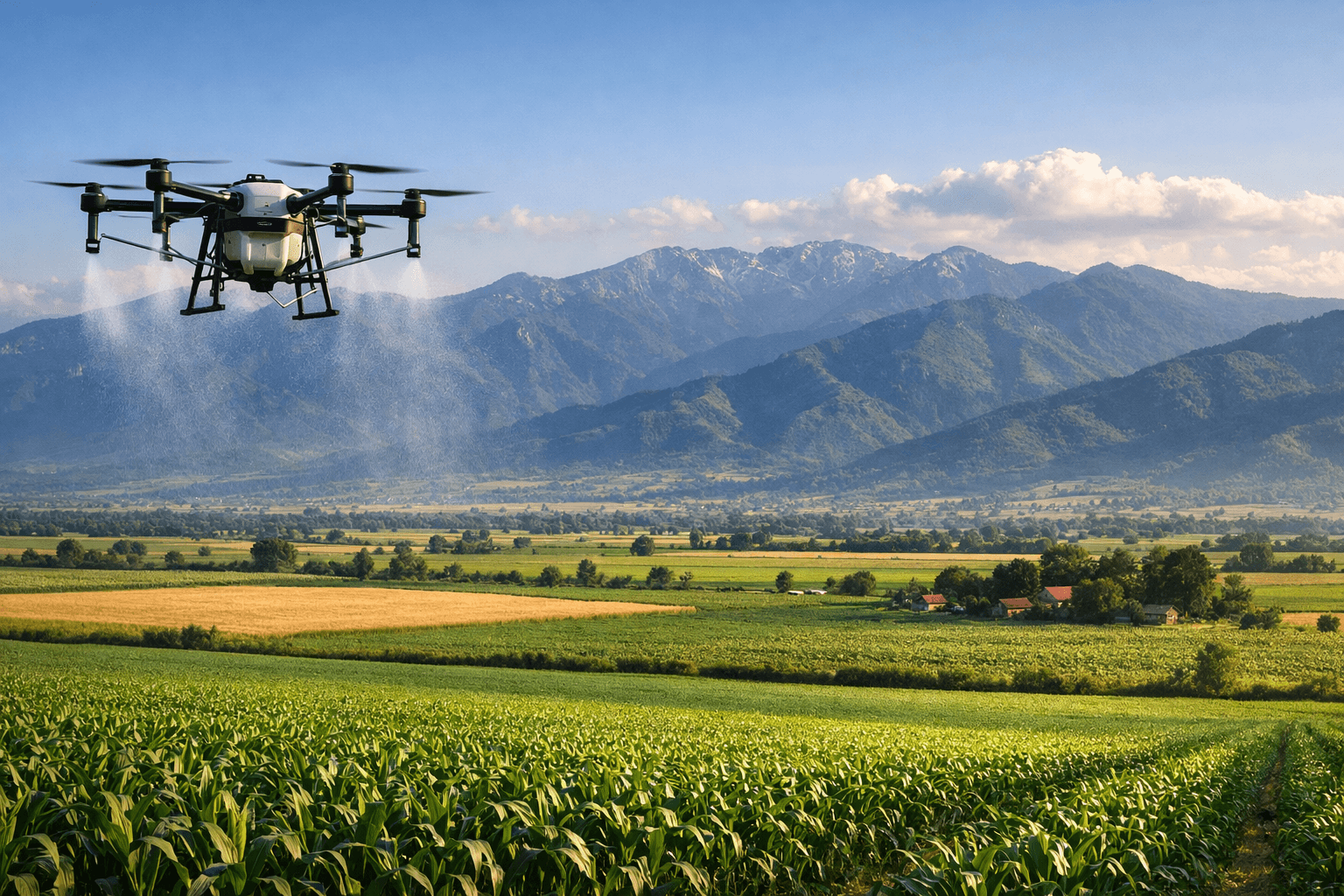
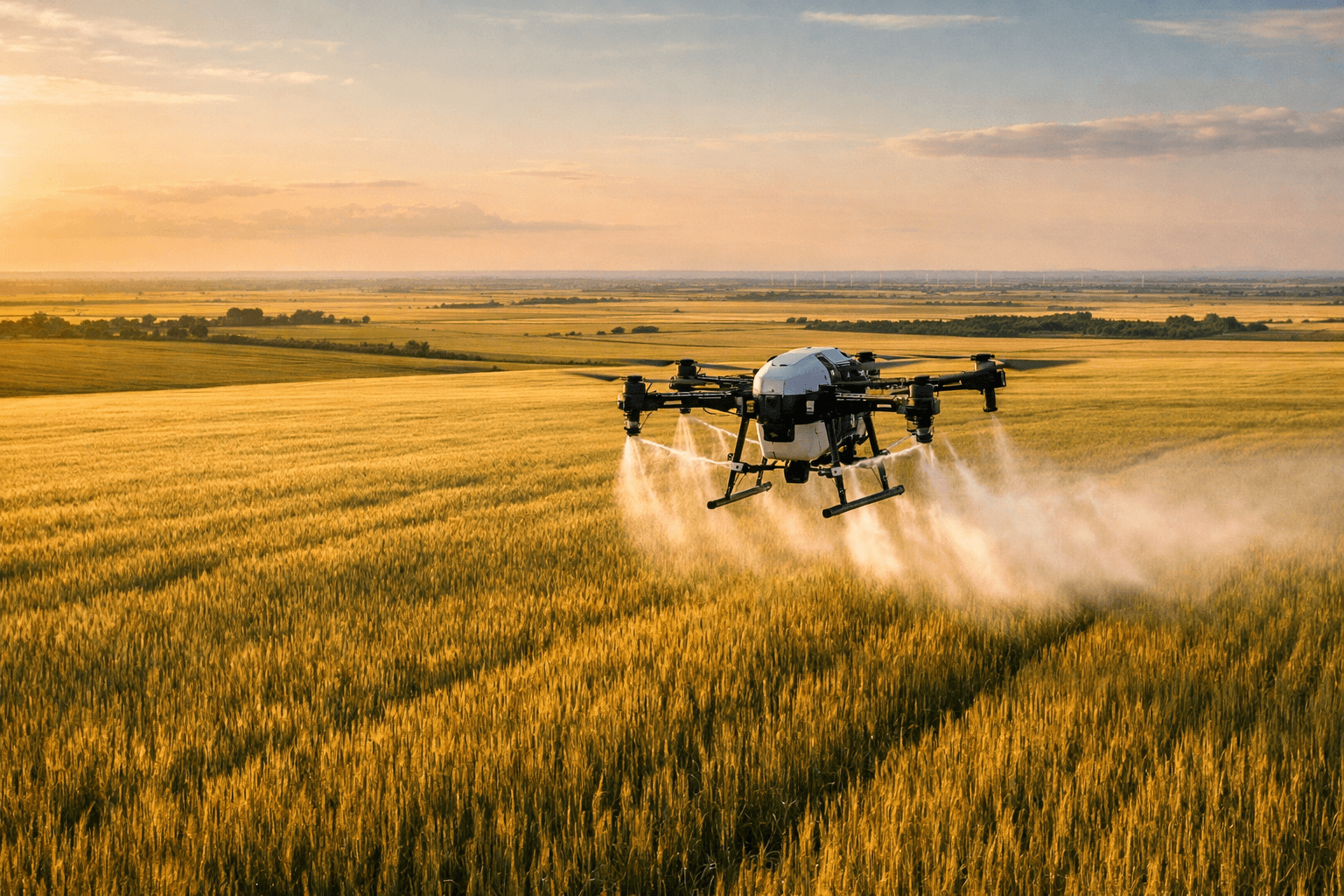
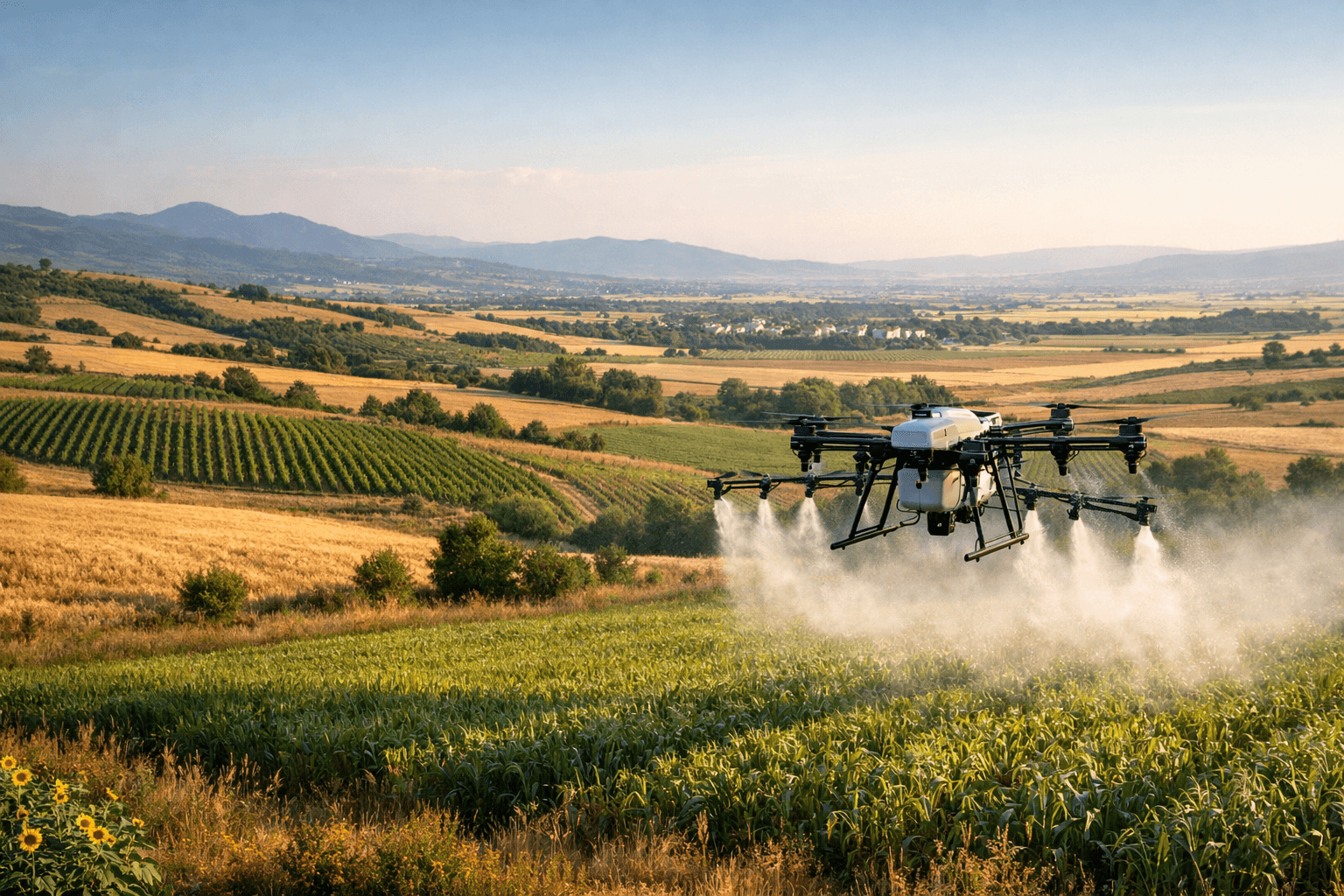
An agricultural drone flies at a height of 2–3 metres above the crop. It has no physical contact with the soil whatsoever – it does not step, compact or leave tracks. This means that spraying after rain can be performed as soon as conditions allow effective application of the preparation, without waiting for the field to dry out completely.
While a tractor requires a minimum of 3–5 days of sunny weather after rain to safely enter a field, the drone is ready for work considerably sooner – often as early as the following day.
No Compaction and No Damage
With conventional spraying of a wet field using a tractor, the damage is twofold: mechanical (trampling) and structural (compaction). Compacted soil impedes root growth and worsens drainage – prolonging the problem of waterlogging. The drone breaks this vicious cycle: it treats the crop without worsening the condition of the soil.
Rapid Mobilisation
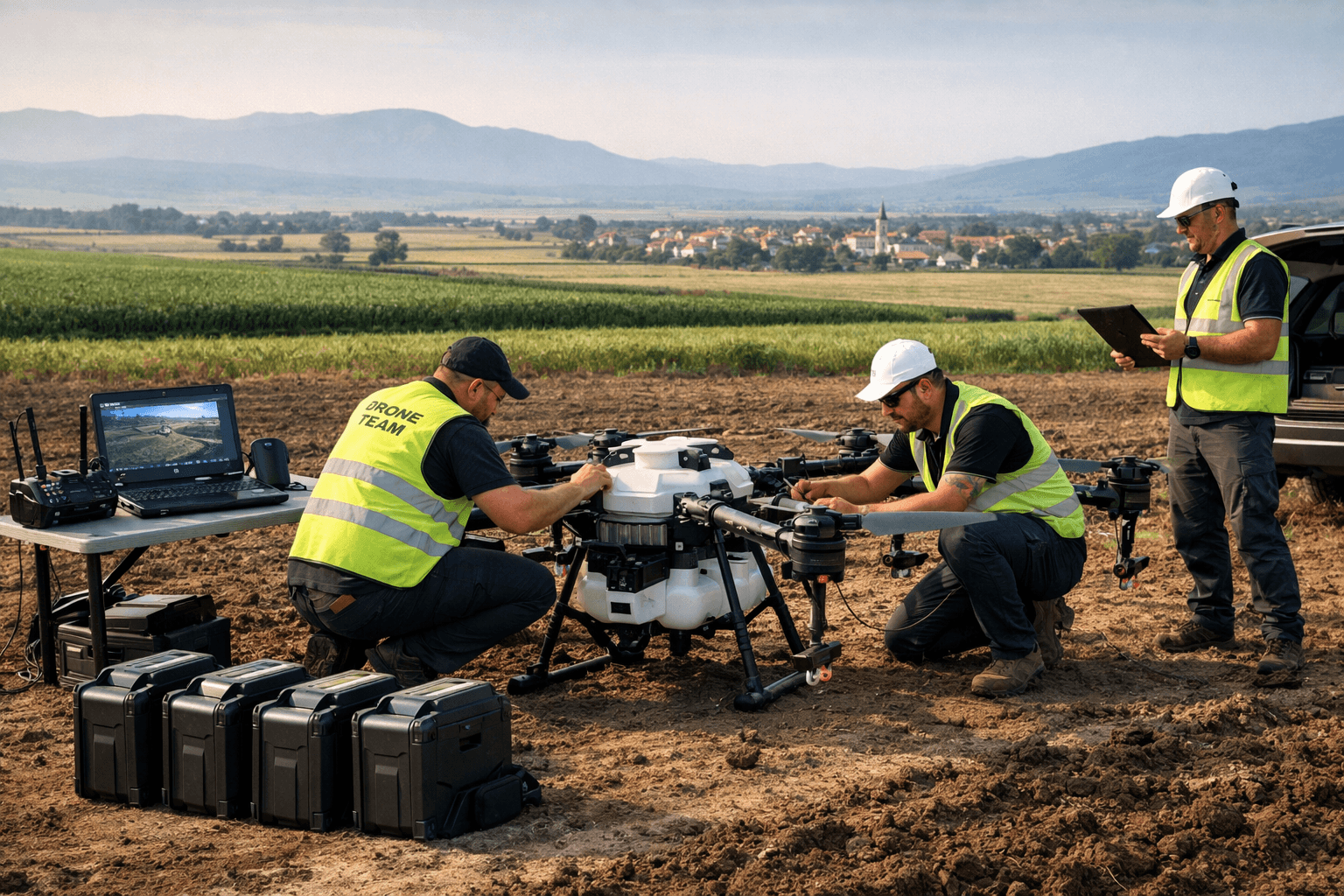
AirAgro's mobile teams can be on site within 24 hours of a request. The equipment is transported by light vehicle – no heavy logistics or special roads are needed. This makes drone in mud a realistic and fast solution.
DJI Agras T50 – Designed for Tough Conditions
IP67 Protection: Operation in Light Rain and Mist
The DJI Agras T50 is certified with a protection class of IP67, meaning complete protection from dust and resistance when submerged in water to a depth of 1 metre for 30 minutes. In practice this means the drone can operate in:
- Light drizzle and mist
- High atmospheric humidity (over 85%)
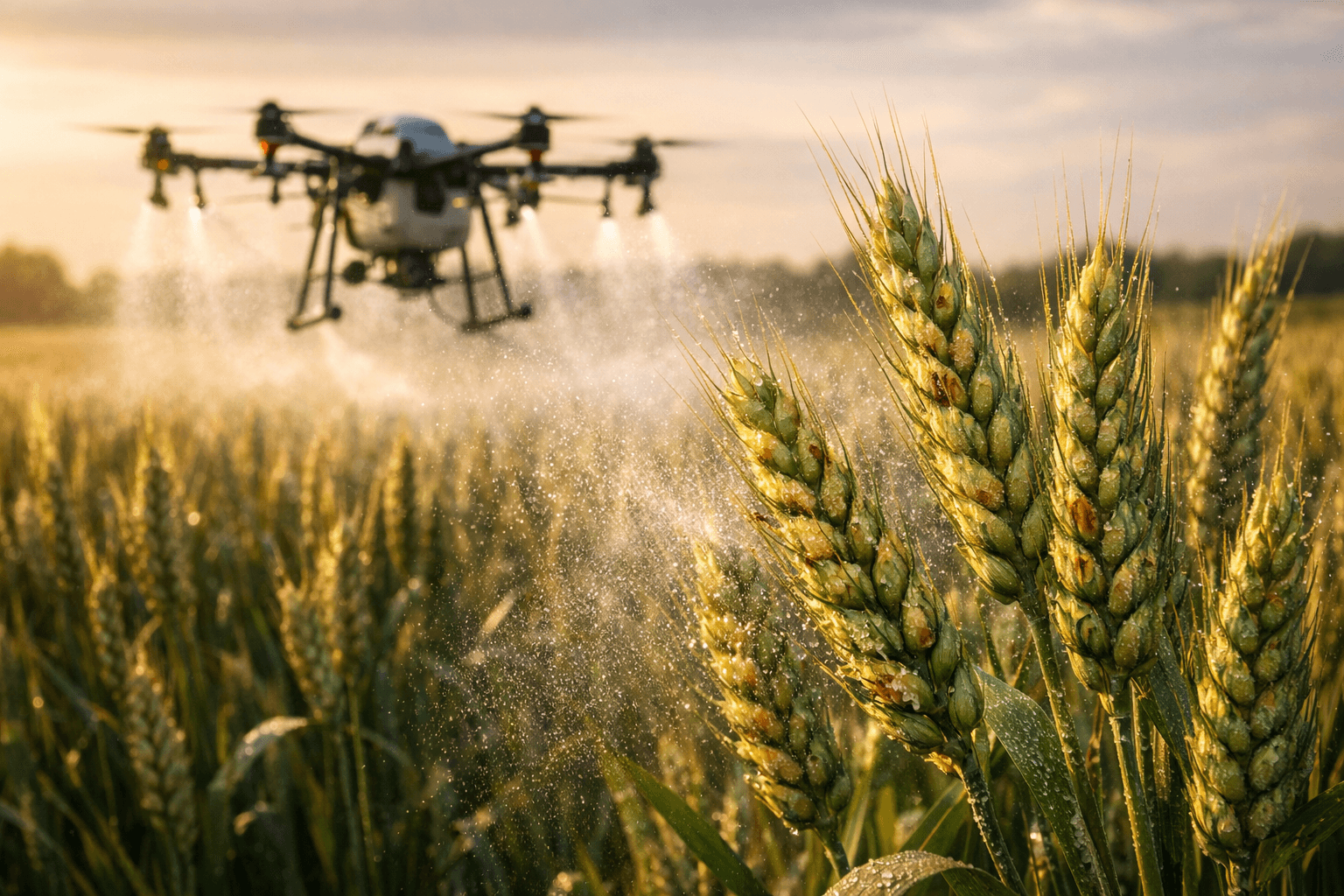
- Dew on the crops – a common situation during early morning treatments
This resilience is of decisive importance in treatment under wet conditions, when the weather window for work is short and unpredictable.
Stability and Productivity
With a 40-litre tank and maximum processing speed of up to 21 hectares per hour, the DJI Agras T50 maintains a steady course even in gusts thanks to centrifugal nozzles and RTK navigation with accuracy to 2 cm. More about the drone's specifications can be found in our article on the DJI Agras T50.
When Drone Spraying in Wet Weather Is Critical
Spring Treatment of Wheat
Spring in Bulgaria often comes with heavy rains and snowmelt. Fields in Dobrudzha, the Thracian Plain and the Danube Plain remain wet for days and even weeks. Precisely then, wheat is at the tillering and early stem elongation stage – a critical moment for herbicide and fungicide treatments. Every delay translates to a direct loss.
With a drone, treatment is performed within the optimal window, even when tractors are standing in the barns. Details on timing can be found in our article when to spray wheat.
Emergency Reactions After Rain – Diseases and Pests
Wet conditions after rain create a perfect environment for fungal diseases: septoria, rusts, fusarium head blight, downy mildew. At temperatures above 15°C and high humidity, the development of pathogens is explosive. Delaying fungicide spraying on wheat by even 48 hours can mean that the disease has already penetrated the stem and is irreversible.
Drone spraying after rain allows a response on the day a problem is discovered – without waiting for conditions that allow tractor entry.
Late Treatments of Tall and Dense Crops
Towards the end of the growing season – June and July – crops are tall (wheat over 70 cm, maize over 2 m), fields are dense and retain moisture. The tractor causes mass lodging of stems when passing through. The drone flies above the crop and applies the preparation uniformly, without any damage. This is especially important for:
- Fungicide follow-up treatment of wheat during flowering and grain fill
- Insecticide spraying of maize against cotton bollworm
- Late foliar feeding of sunflower and rapeseed
Practical Guidelines for Effective Spraying in Wet Conditions
Optimal Meteorological Conditions
For treatment under wet conditions to be effective, the following parameters must be observed:
| Parameter | Optimal Value | Acceptable Range | | ----------------- | ---------------- | --------------------- | | Wind speed | up to 3 m/s | up to 5 m/s (maximum) | | Temperature | 12–25°C | 5–30°C | | Relative humidity | 50–80% | 40–90% | | Precipitation | no precipitation | light drizzle (IP67) |
Minimum Dry Window After Treatment
After the preparation is applied, a period of at least 2 hours without precipitation is required so that the active substance can be absorbed by the leaves. For systemic fungicides this period is 1.5–2 hours, for contact ones – 2–3 hours. Our operators monitor weather forecasts at hourly level and plan treatment within the appropriate window.
Adjuvants Are Mandatory
In high humidity and on wet leaves, adjuvants (spreader-stickers) improve droplet adhesion, distribution of the preparation and film resistance to subsequent dew. AirAgro advises clients on suitable adjuvants. All our operators hold a certificate for working with plant protection products (PPP) and comply with the requirements of the BFSA (Bulgarian Food Safety Agency) for safe treatment.
Real Scenarios from Practice
Scenario 1: Wheat in Thrace – Fungicide Spraying After Spring Rain
A farmer with 2,000 decares of wheat in the Stara Zagora area needs to perform fungicide treatment against septoria. After 4 days of rain the field is wet and the tractor cannot enter. The disease is spreading rapidly in the humidity. Every lost day means a loss of 3–5% of the potential yield.
With a drone: The AirAgro team is on site the next day. The 2,000 decares are treated in less than 10 hours. No ruts, no trampling, no area loss. The saved yield – estimated at 15,000–25,000 BGN compared to a scenario of waiting 7 days for a tractor.
Scenario 2: Maize in Dobrudzha – Emergency Insecticide Treatment
Mass appearance of cotton bollworm after warm rain in early July. The maize is over 2 metres tall, the field is wet – a tractor will get stuck and lodge the stalks. With timely drone response, damage is limited to 5%; with delay – 25–30%.
Regions Where We Serve Emergency Requests
AirAgro has mobile teams in Plovdiv, Stara Zagora, Pazardzhik, Haskovo, Dobrudzha and the entire Thracian Plain. For a full list of services, see drone spraying services.
Frequently Asked Questions
Can the drone spray during rain?
The DJI Agras T50 has IP67 protection and can operate in light drizzle and mist. However, in moderate to heavy rain, spraying is not recommended – not because of the drone, but because the rain washes off the preparation from the leaves before it is absorbed. The ideal moment is immediately after the rain stops, when the field is still wet but there is no active precipitation.
How soon after rain can spraying be done with a drone?
The drone can start work immediately after the rain stops – there is no need to wait for the field to dry out. The only condition is a forecast of at least 2 hours without rain after treatment, so the preparation can be absorbed. For a tractor, waiting of 3 to 7 days is needed depending on soil type and rainfall intensity.
Is drone spraying more expensive than a tractor?
The price per decare for a drone may be 1–2 BGN higher than a tractor under normal conditions. But on a wet field the tractor simply cannot work, and the losses from delay (20–30% of yield) are incomparably greater than the difference in treatment price. In emergency situations a drone is not an expense, but an investment that saves the harvest.
What preparations can be applied with a drone?
With a drone, all BFSA-approved plant protection products can be applied: herbicides, fungicides, insecticides, foliar fertilisers, plant growth regulators and biopreparations. The small volume of water (1–2 L/decare) requires the use of concentrated solutions and suitable adjuvants, which we advise on for each specific case.
Do you work on emergency requests at weekends?
Yes. AirAgro offers 24-hour emergency treatment, including at weekends and public holidays. We understand that diseases and pests do not respect working hours, so our team is available in crisis situations. Just call +359 884 242 406 and we will organise treatment as quickly as possible.
Don't Wait for the Field to Dry Out – Act Now
Every hour spent waiting in wet weather is lost time and lost money. The drone is the only tool that allows you to perform timely crop protection when the tractor is powerless.
AirAgro offers:
- ✅ Free consultation – we discuss your situation, the crop and the preparation
- ✅ Emergency treatment – team mobilisation within 24 hours
- ✅ Fast response – we operate 7 days a week in crisis situations
- ✅ Certified operators – BFSA-licensed, experienced in working with PPP
- ✅ Coverage across Southern Bulgaria – Plovdiv, Stara Zagora, Pazardzhik, Haskovo, Dobrudzha
📞 Call now: +359 884 242 406
Don't let rain rob you of your harvest. With drone spraying in wet weather from AirAgro, your crops receive the protection they need – on time and without compromise.