Vegetable Spraying with Drone – Gentle and Effective Treatment
Vegetable growing in Bulgaria has a long and rich tradition. From the legendary Plovdiv tomatoes and Pazardzhik peppers to the Sandanski cucumbers and Harmanli cabbage – vegetable crops are an inseparable part of Bulgarian agriculture and food culture. These delicate crops, however, require careful plant protection, and conventional methods are not always gentle enough.
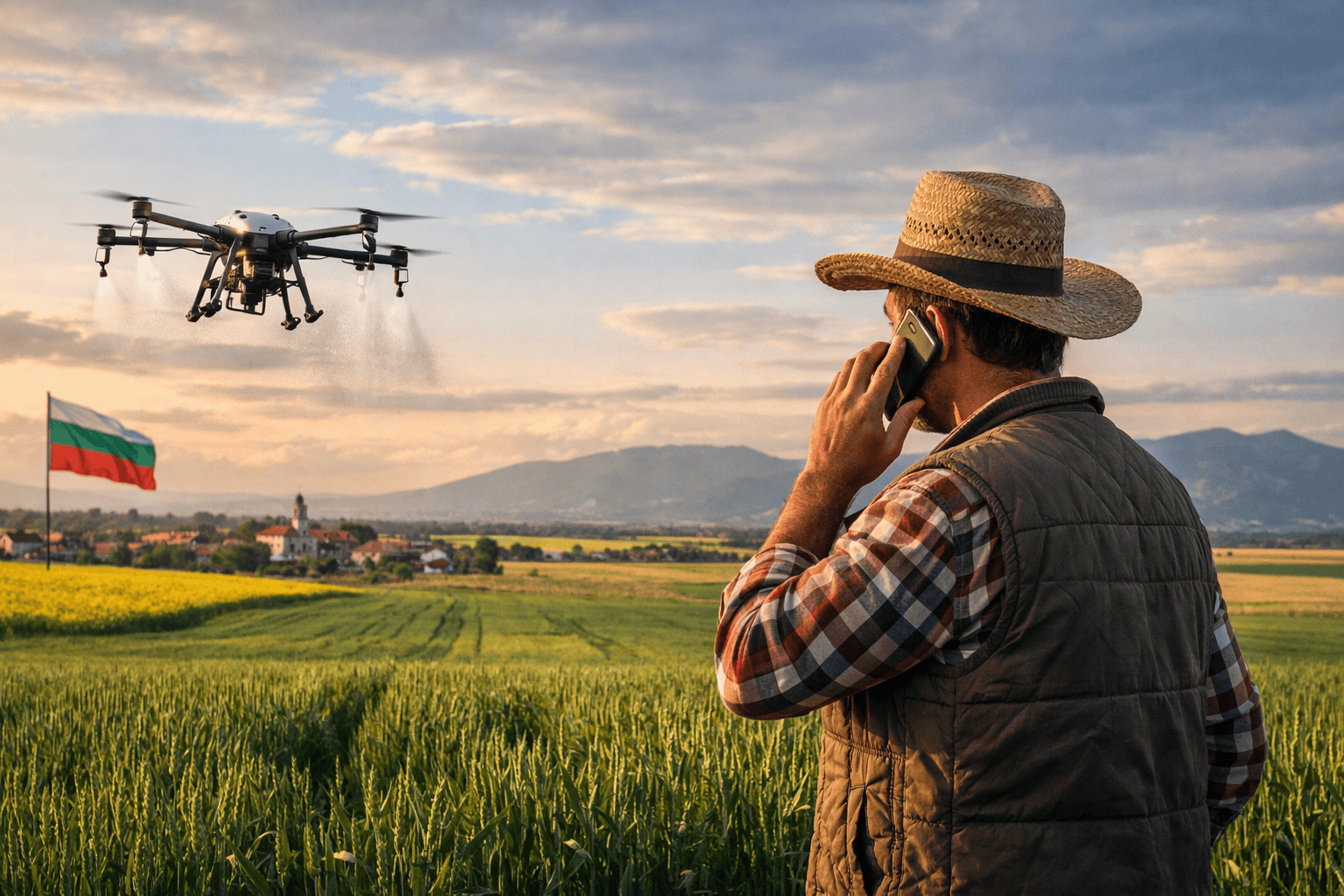
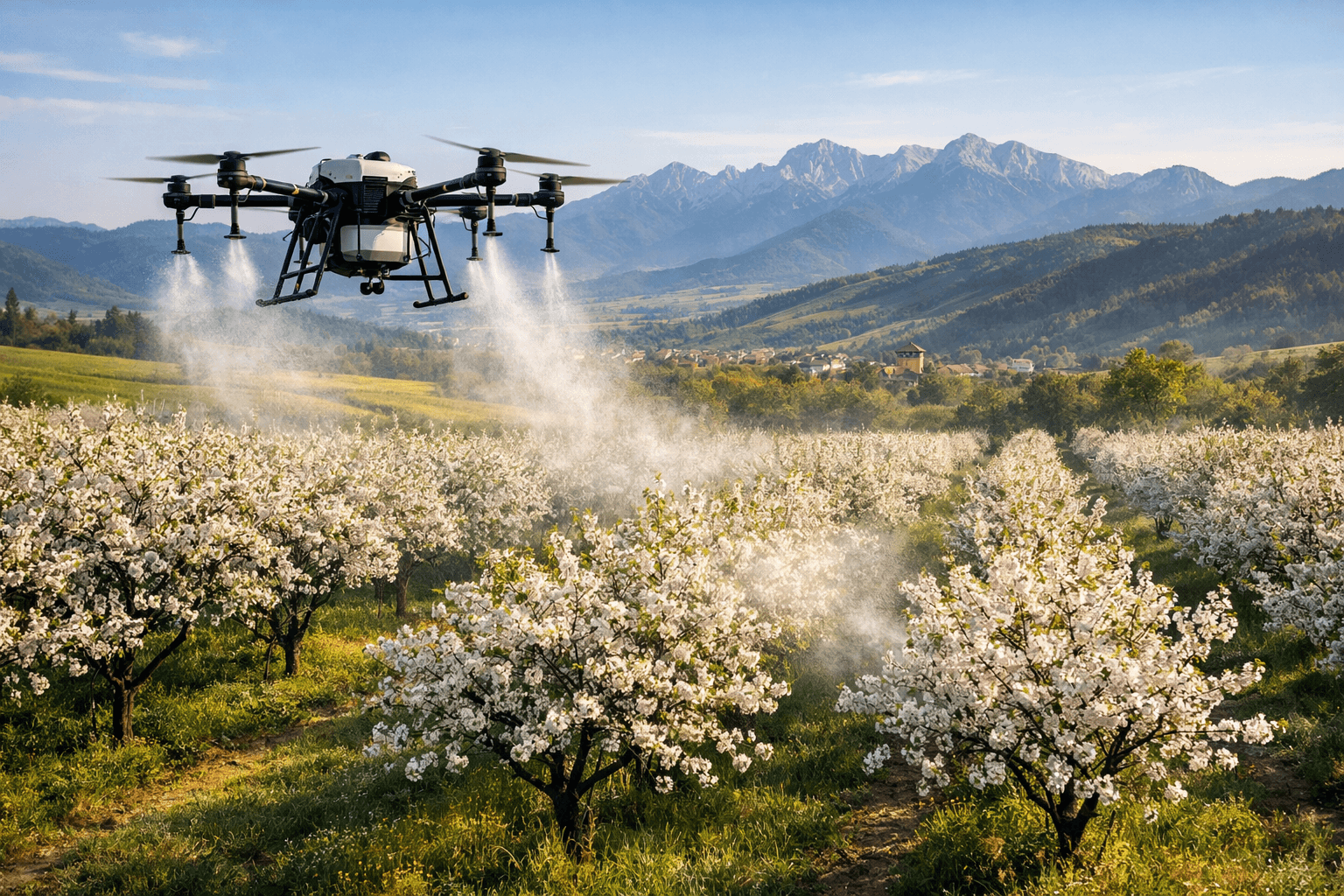
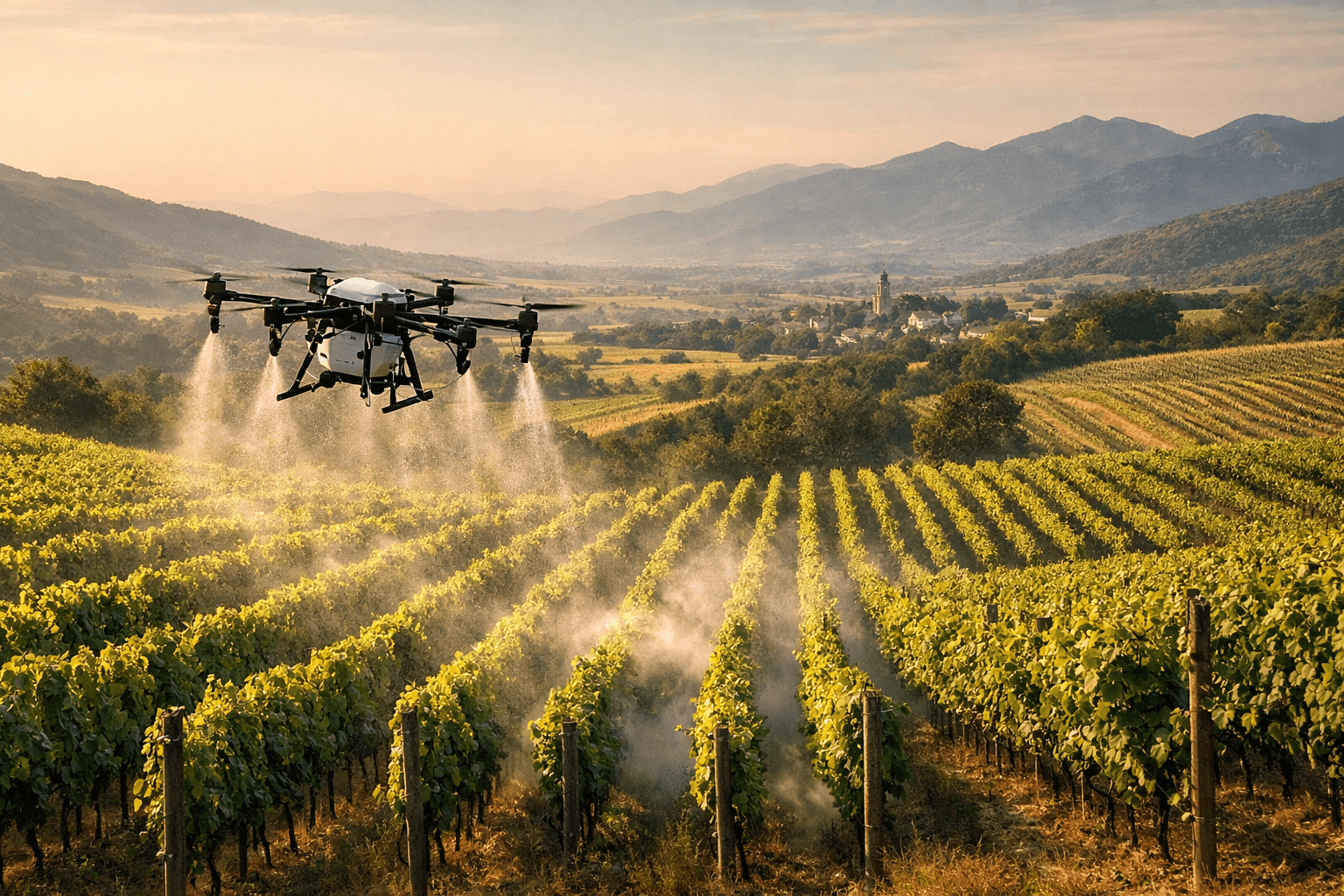
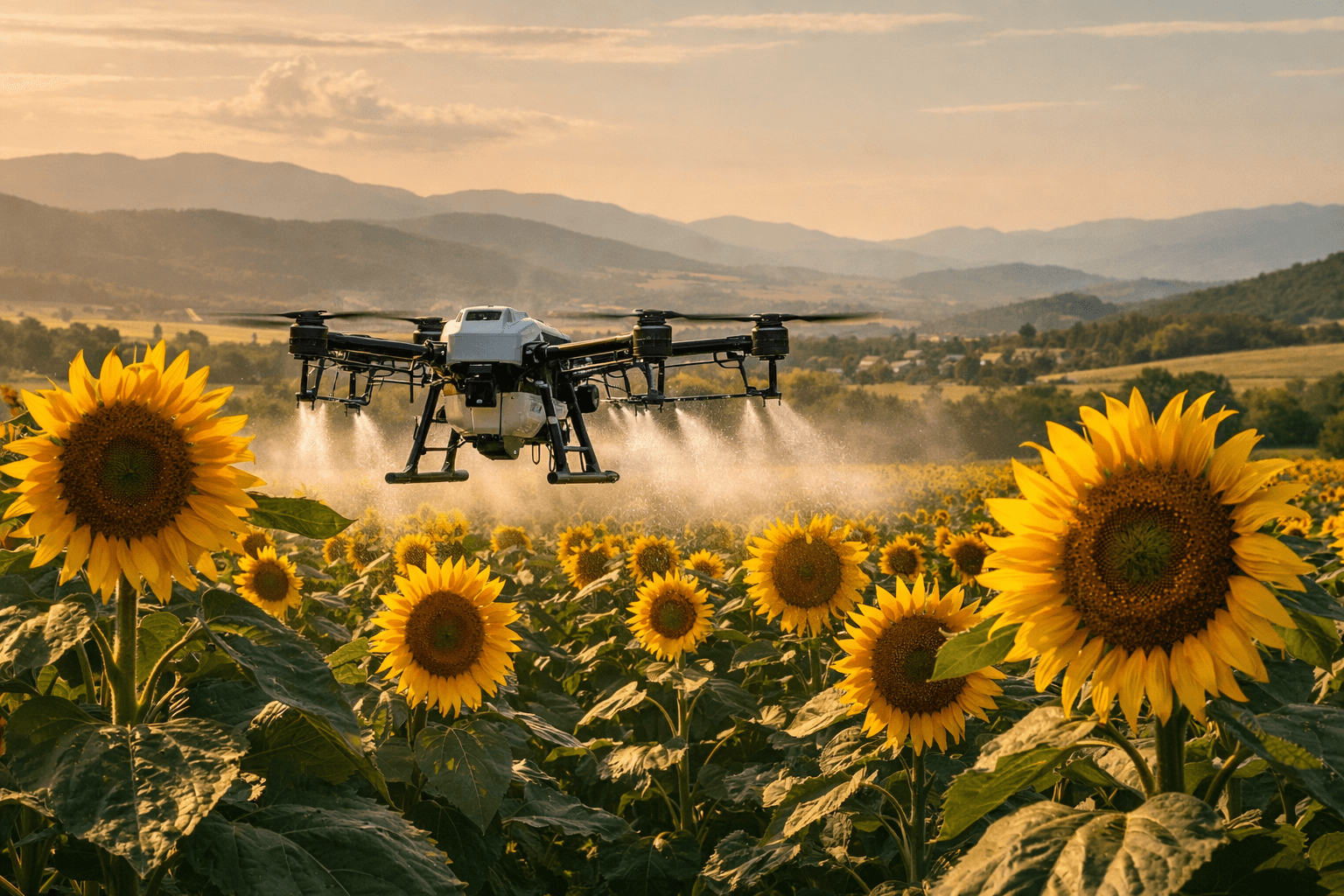
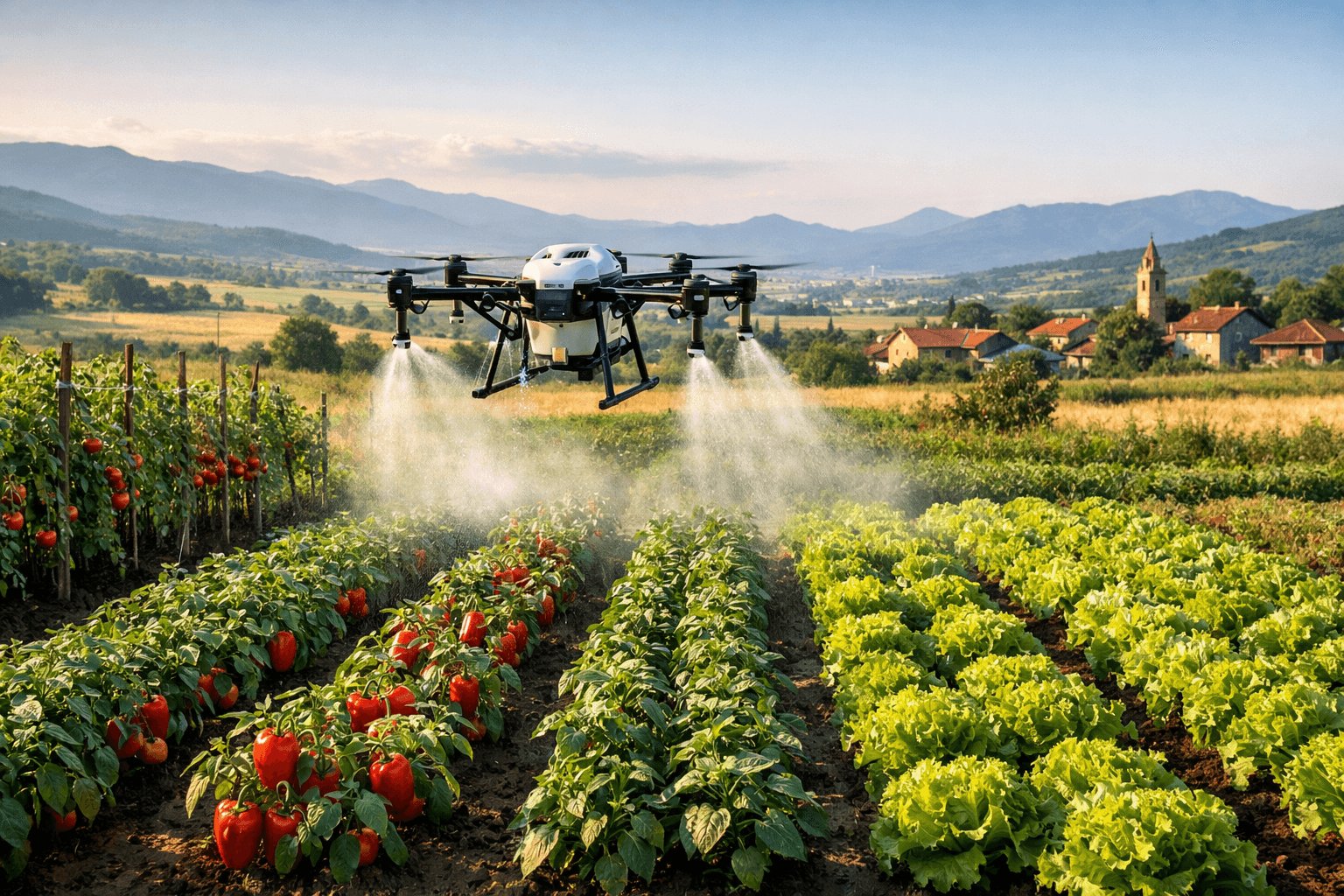
Vegetable drone spraying is an innovative solution that combines precision and delicacy. The drone treats gently without trampling, compacting or damaging plants, providing effective protection of vegetable gardens.
Why Vegetables Need a Gentle Approach
Vegetable crops are more delicate than grain crops. They have tender stalks, fragile leaves and fruit that are easily damaged by mechanical impact. Heavy machinery used in conventional spraying creates several problems:
Soil Compaction
Vegetables have a shallow root system especially sensitive to compaction. Heavy sprayers compact the soil between rows, hinder root development and reduce yield.
Trampling and Mechanical Damage
When passing between rows, machinery wheels and construction inevitably damage edge plants. With crops like staked tomatoes or peppers the damage can be significant.
Uneven Coverage
Ground sprayers treat mainly from the sides. With dense crops and lush leaf mass, internal parts of the plants remain insufficiently covered with preparation.
Limited Access
With mulched areas, drip-irrigated plots or staked vegetables, ground machinery access is severely limited.
Vegetable drone spraying eliminates all these problems completely.
Main Vegetable Crops and Their Protection
Tomatoes
Tomatoes are the leading vegetable crop in Bulgaria, grown both in the open field and in greenhouses. Main threats:
- Late blight (Phytophthora infestans) – the most dangerous disease, can destroy the harvest within days in favourable conditions
- Alternaria – dark spots on leaves and fruit
- Septoria – leaf spot
- Tomato leaf miner (Tuta absoluta) – extremely dangerous pest that entered Bulgaria in recent years
- Whitefly – pest and virus vector
With open-field tomatoes the DJI Agras T50 drone provides excellent coverage – spraying from above and reaching all plant parts, including the underside of leaves where pathogens often hide.
Peppers
Pepper is an emblematic Bulgarian crop, especially in the regions around Plovdiv, Pazardzhik and Kyustendil. Main threats:
- Powdery mildew – white coating on leaves
- Verticillium wilt – soil pathogen causing wilting
- Aphids – deform leaves and transmit viruses
- Thrips – damage flowers and fruit
Pepper is an especially delicate crop and drone spraying is ideal – zero mechanical impact and precise dosing.
Potatoes
Potatoes are grown massively in Bulgaria, especially in the Samokov, Smolyan and Rhodopes areas. Main threats:
- Potato late blight (Phytophthora infestans) – the same disease that attacks tomatoes
- Colorado beetle – the iconic potato pest
- Alternaria – leaf spot
- Wireworms – damage tubers
With potatoes the drone is especially useful for fungicide treatments in wet conditions when fields are impassable for machinery.
Cucumbers and Courgettes
- Downy mildew – affects leaves, causes spots and drying
- Powdery mildew – white coating, reduces photosynthesis
- Bacterial leaf spot – oily spots on leaves
- Aphids – deformations and viruses
Cabbage and Cauliflower
- Cabbage moth – larvae eat leaves
- Clubroot (Plasmodiophora brassicae) – soil disease
- Grey rot – in wet conditions
- Cabbage butterfly – caterpillars damage leaves
Advantages of Drone Spraying for Vegetables
Gentle Treatment
The drone does not come into contact with plants. The preparation is applied with fine dispersion from above, without mechanical load on tender vegetable stalks and fruit.
Precise Dosing
The GPS navigation of the DJI Agras T50 guarantees uniform application of the preparation. Every plant receives the exact dose – neither more nor less. This is critical with vegetables, as overdosing can cause phytotoxicity (leaf burn).
Zero Soil Compaction
The fertile, crumbly topsoil is of fundamental importance for vegetables. The drone preserves soil structure by not entering the field. The root system of plants develops unhindered.
Fast Response to Diseases
Tomato or potato late blight can spread within days. The drone enables fast response – treatment within hours of establishing the disease. This speed can be the difference between a saved and a lost harvest.
Work Without Stepping on Mulch and Drip Lines
In modern vegetable farms many areas are mulched with film and equipped with drip irrigation. Heavy machinery passes risk damaging mulch and irrigation lines. The drone creates no such risk.
Fewer Chemicals in the Produce
Precise dosing means less preparation per unit area. This is especially important with vegetables consumed fresh. Fewer chemicals in the produce means healthier food.
Practical Applications – Examples from Bulgarian Practice
Spring Treatment of Open-Field Tomatoes
In the Plovdiv and Pazardzhik areas, mass planting of open-field tomatoes is in May. First treatments against late blight and pests begin 2–3 weeks after planting. With a drone these treatments are performed quickly and without trampling the still-small plants.
Protection of Potato Fields in the Rhodopes
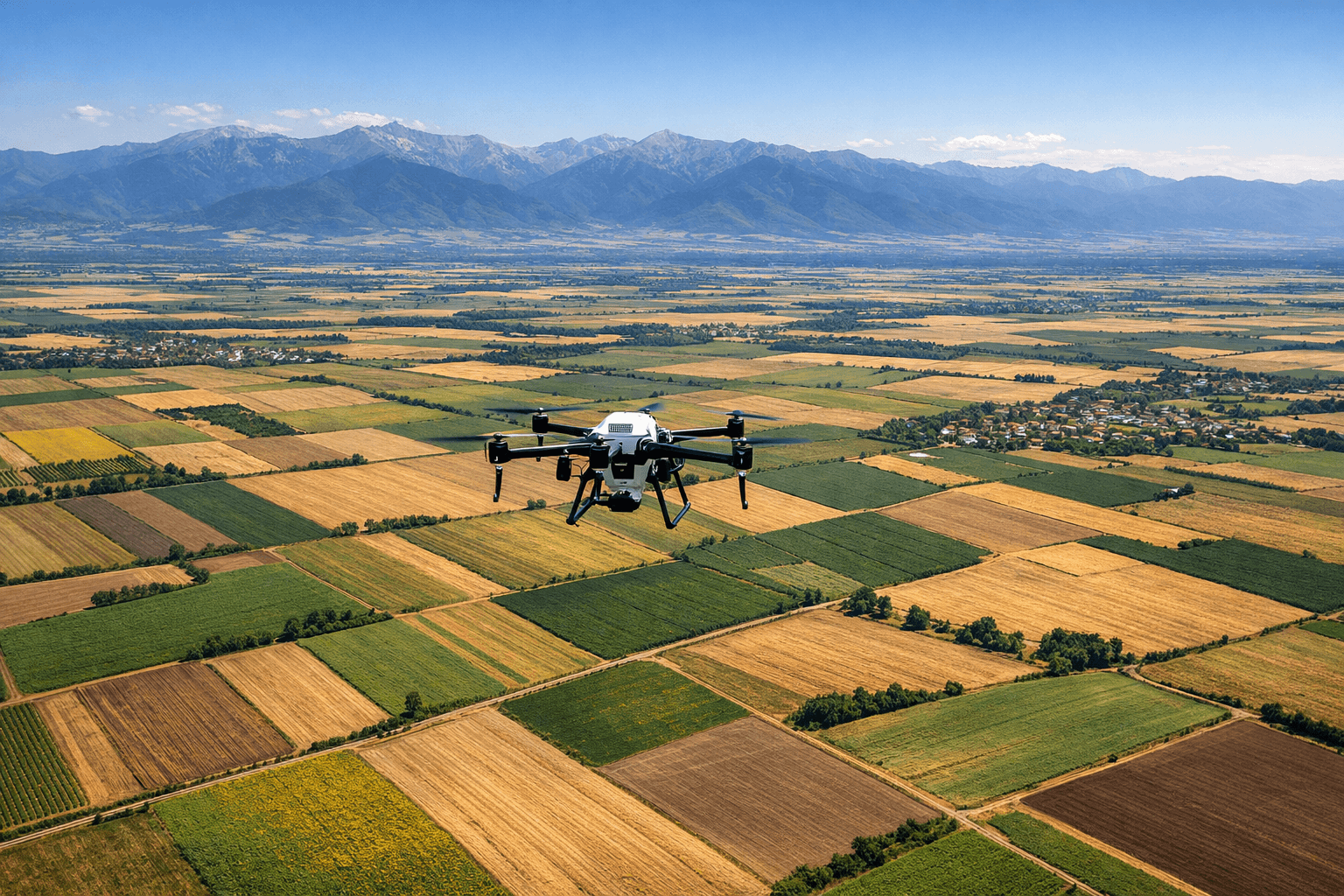
In mountain areas the terrain is often sloped and difficult to access. Potato drone spraying is the ideal solution – the drone does not depend on slope and provides uniform coverage.
Vegetable Gardens in the Thracian Plain
Mixed vegetable farms in Thrace (tomatoes, peppers, aubergines, cucumbers) require different treatments for different crops. The drone can easily be re-programmed for each plot with different parameters.
How Drone Vegetable Spraying Works
Stage 1: Consultation
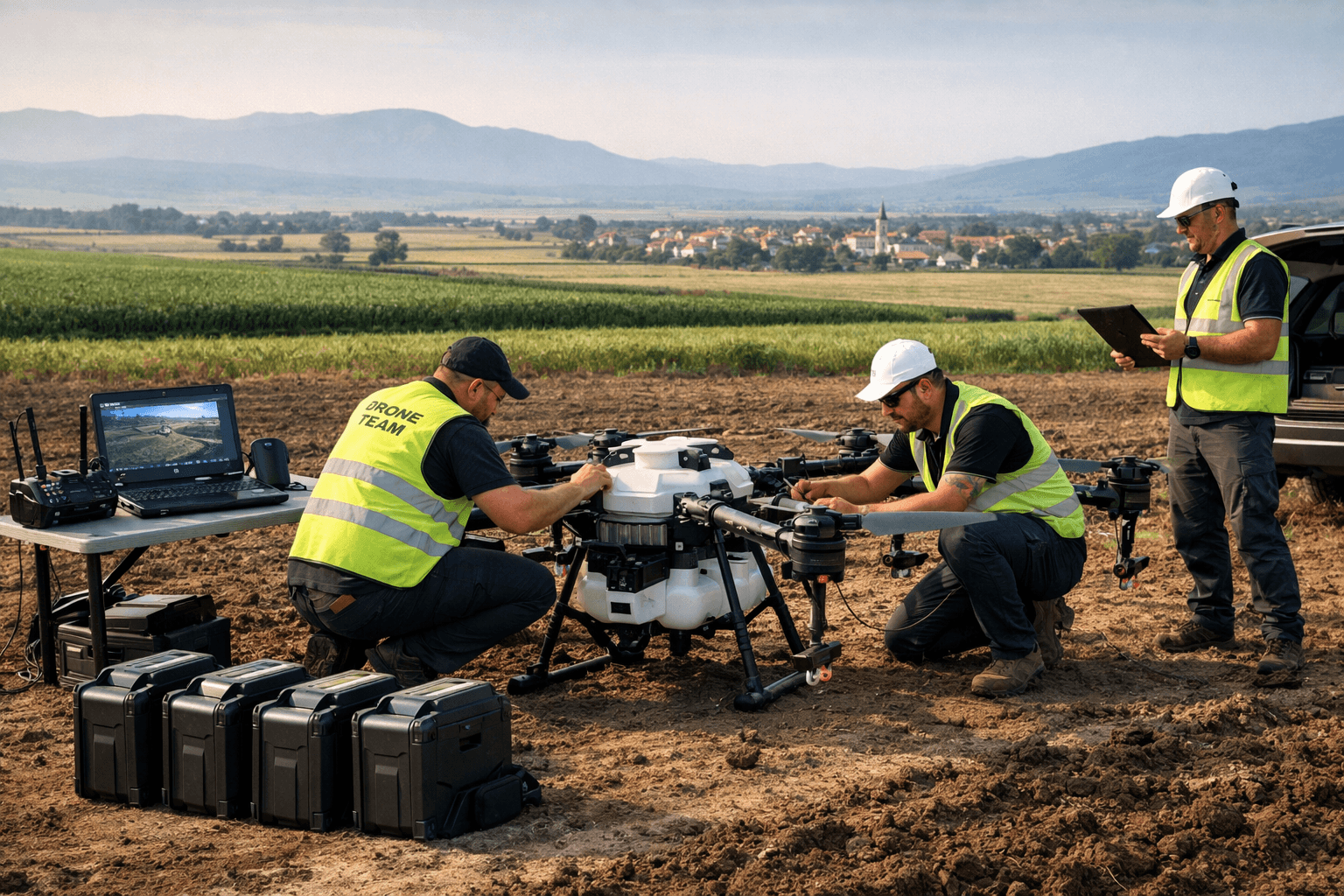
The AirAgro team discusses with you what vegetables you grow, what the problems are and what your budget is. A plant protection plan is prepared.
Stage 2: Preparation
The field is mapped with GPS. Spraying parameters are determined – height, speed, dosage, strip width. With vegetables the drone usually flies at 1.5–3 metres above the crop.
Stage 3: Treatment
The DJI Agras T50 performs automated spraying along a pre-set route. The operator monitors the process and adjusts parameters in real time if needed.
Stage 4: Documentation
The grower receives information about treated areas, parameters used and conditions. This is useful for maintaining a crop protection diary.
For full service information see drone spraying services.
Tips for Vegetable Growers
Treatment Intervals
With vegetables, treatment intervals are usually 7–10 days, depending on crop and phytosanitary situation. In wet weather the interval may be shorter.
Pre-Harvest Intervals
Strictly observe the pre-harvest intervals of preparations. With vegetables harvested continuously (tomatoes, peppers, cucumbers), it is important not to treat within the indicated period before harvesting.
Combination of Biological and Chemical Agents
Modern vegetable production increasingly relies on biological plant protection agents. The drone is an excellent means of applying biopesticides too – entomopathogenic agents, bacterial preparations, plant extracts.
Monitor Crops
Regular inspection is key. Check plants for signs of diseases and pests at least 2–3 times per week. Respond quickly at the first signs.
Price of Vegetable Drone Spraying
For price information see drone spraying prices. With vegetables the price may vary depending on crop type, crop density and area size.
Do not forget that with vegetables, the saved harvest from timely treatment far exceeds the service value. One failed season due to late blight can cost tens of thousands of lev.
Drone for Crop Protection – Technology
The DJI Agras T50 is equipped with a 40-litre tank, precision nozzles and RTK GPS system for maximum accuracy. Its radar reads the terrain and automatically maintains the set height above crops. Learn more about drone crop protection in our blog.
Also read about the benefits of drones in agriculture in our detailed article.
Orchards – Similar Solution
If besides vegetables you also grow fruit trees, the drone is suitable for those too. Read more about orchard spraying with a drone.
Frequently Asked Questions
Can the drone spray small vegetable gardens?
Yes. The drone is flexible and treats areas of any size – from 2–3 decares to hundreds of decares. For small areas spraying takes minutes.
Is drone spraying safe for vegetables consumed fresh?
Safety depends on the choice of preparation and observance of the pre-harvest interval, not on the method of application. The drone applies the same preparations as conventional sprayers, but more precisely. With proper observance of pre-harvest intervals the produce is completely safe.
Can the drone apply biological preparations?
Yes. The drone is an excellent means of applying biological preparations, bacterial agents and plant extracts. The low solution volume and fine dispersion are suitable for most biopesticides.
Does drone spraying affect the irrigation system?
No. The drone flies above the crop and does not in any way affect drip irrigation, mulch film or other irrigation system elements.
Request a Free Consultation for Vegetable Drone Spraying
Your vegetables deserve delicate and effective care – from planting to the last harvest. Do not wait for late blight or pests to destroy your harvest!
What we offer to vegetable growers:
- Free consultation and farm inspection – our team will visit your vegetable garden and assess treatment needs
- Personalised treatment plan – a detailed spraying schedule tailored to the types of vegetables, pre-harvest intervals and phytosanitary situation
- Drone demonstration of the DJI Agras T50 – see on-site how the drone treats gently without trampling, compacting or damaging plants and the irrigation system
- Fast response to late blight – in case of emergency disease we respond within 24–48 hours
Contact us:
- 📞 Call us at +359 884 242 406 for a free consultation
- 🌐 Visit airagro.bg and request a farm inspection
- 📋 Request drone spraying services for your vegetable areas
The first step is free – call and request a consultation and farm inspection. Together we will prepare a treatment plan that will protect your vegetable harvest from the first to the last day of the season!