Drone for Crop Protection – a Revolution in Crop Care
Crop protection has always been one of the most important challenges for agricultural producers. From centuries-old manual treatment methods to modern self-propelled sprayers – technology has constantly evolved. Today the drone for crop protection represents the next step in this evolution, offering farmers unprecedented precision, speed and efficiency.
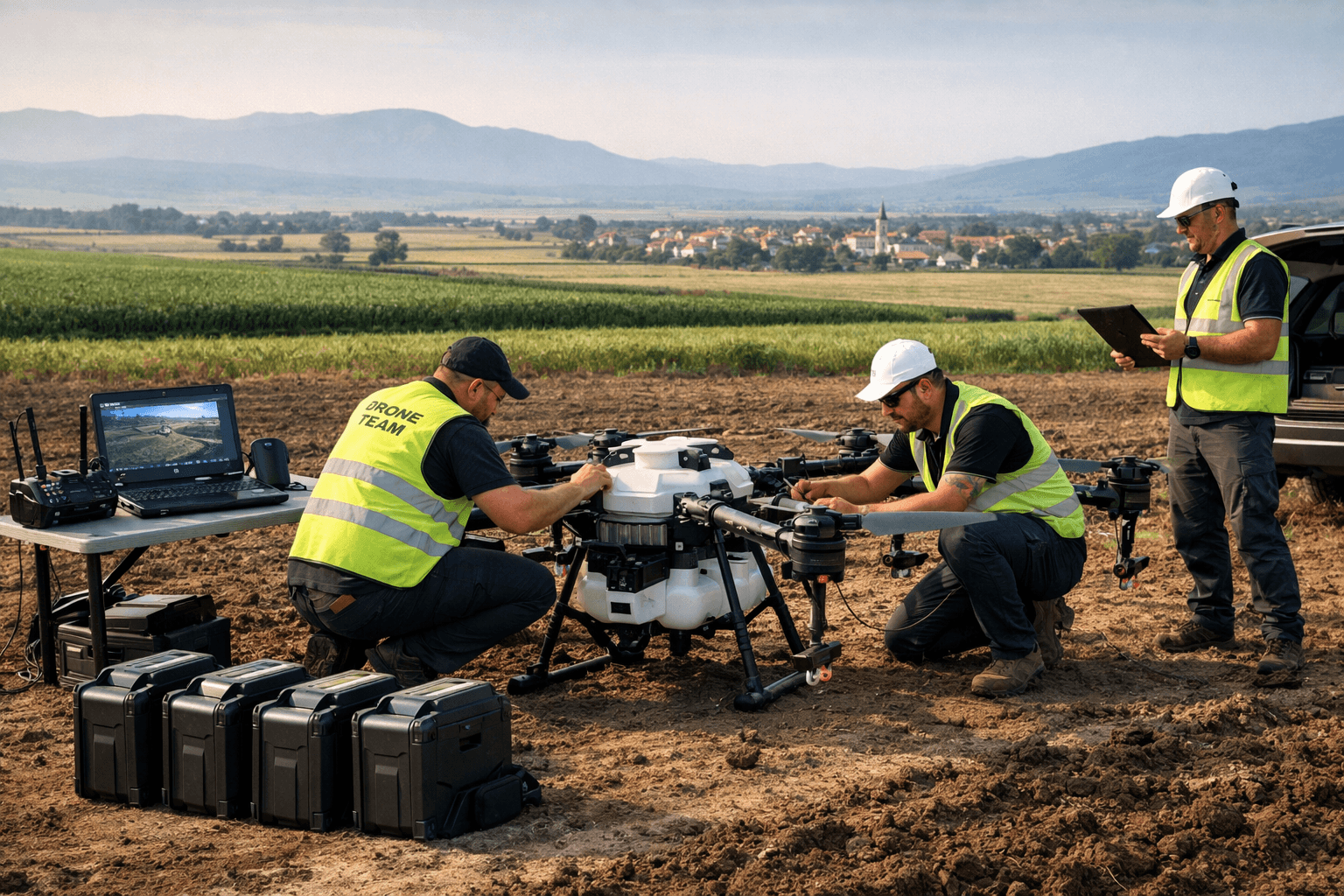
At AirAgro we use the DJI Agras T50 for professional crop protection on agricultural farms throughout Bulgaria. In this article we will look at how modern agri drones are changing the way we protect our crops.
Why Crop Protection Is So Important
Before we examine the technology, let us recall why crop protection is critical for every farm:
Losses without Treatment
Without adequate crop protection, losses from diseases, pests and weeds can reach 30–70% of the potential yield. For Bulgarian farmers growing wheat, maize, sunflower or rapeseed, this means enormous financial losses.
The Time Factor
Treatment effectiveness depends critically on timing. A delay of even 2–3 days can turn a curable disease into an uncontrollable spread. Here the speed of the drone for crop protection is of decisive importance.
Quality of Application
It is not enough simply to spray a preparation – it is important that it reaches the target organisms at the correct dose. Uneven coverage leads to zones with insufficient treatment (where the disease continues) and zones with overuse (which is economically unfavourable and ecologically harmful).
How the Drone Improves Crop Protection
Precision Application of Preparation
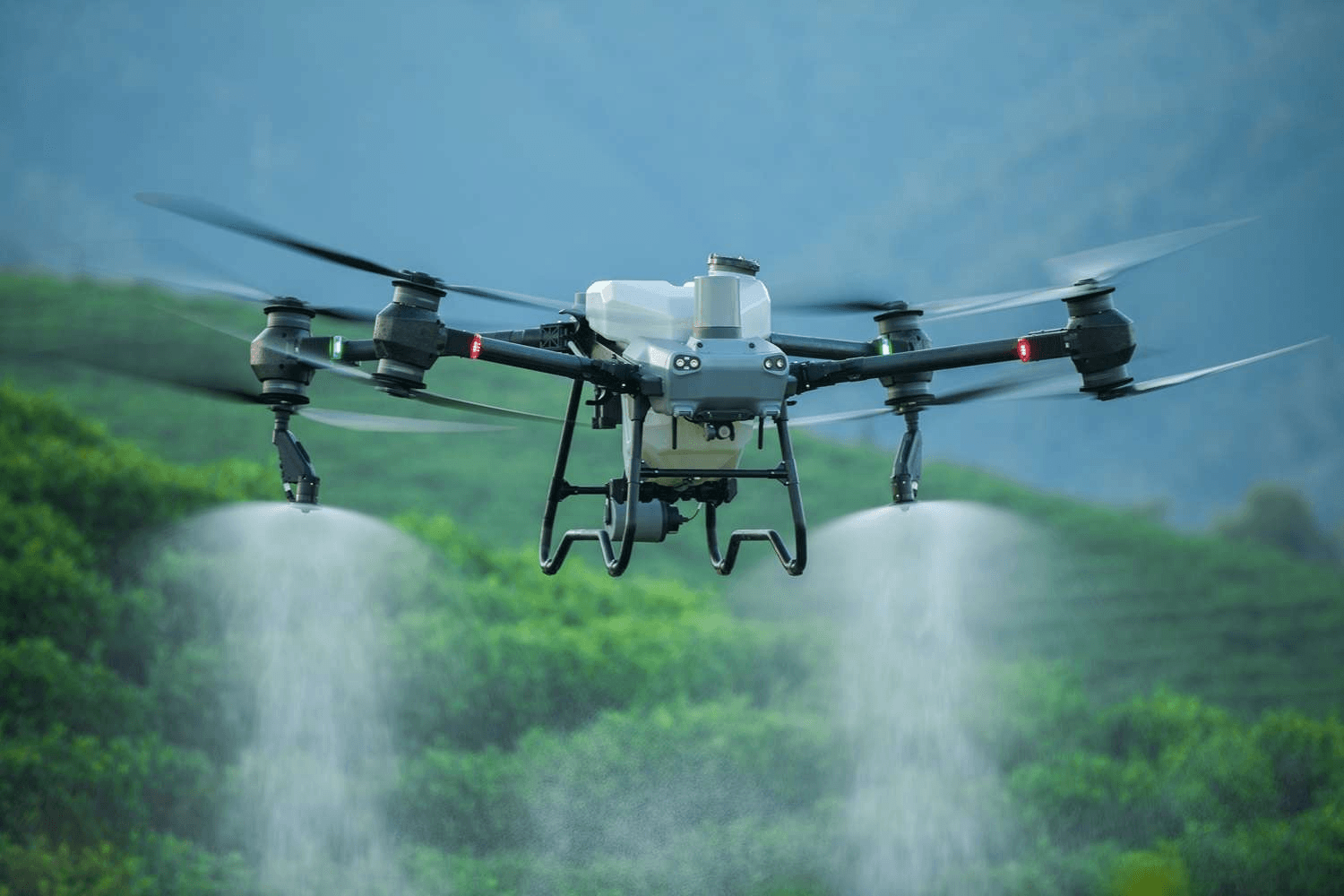
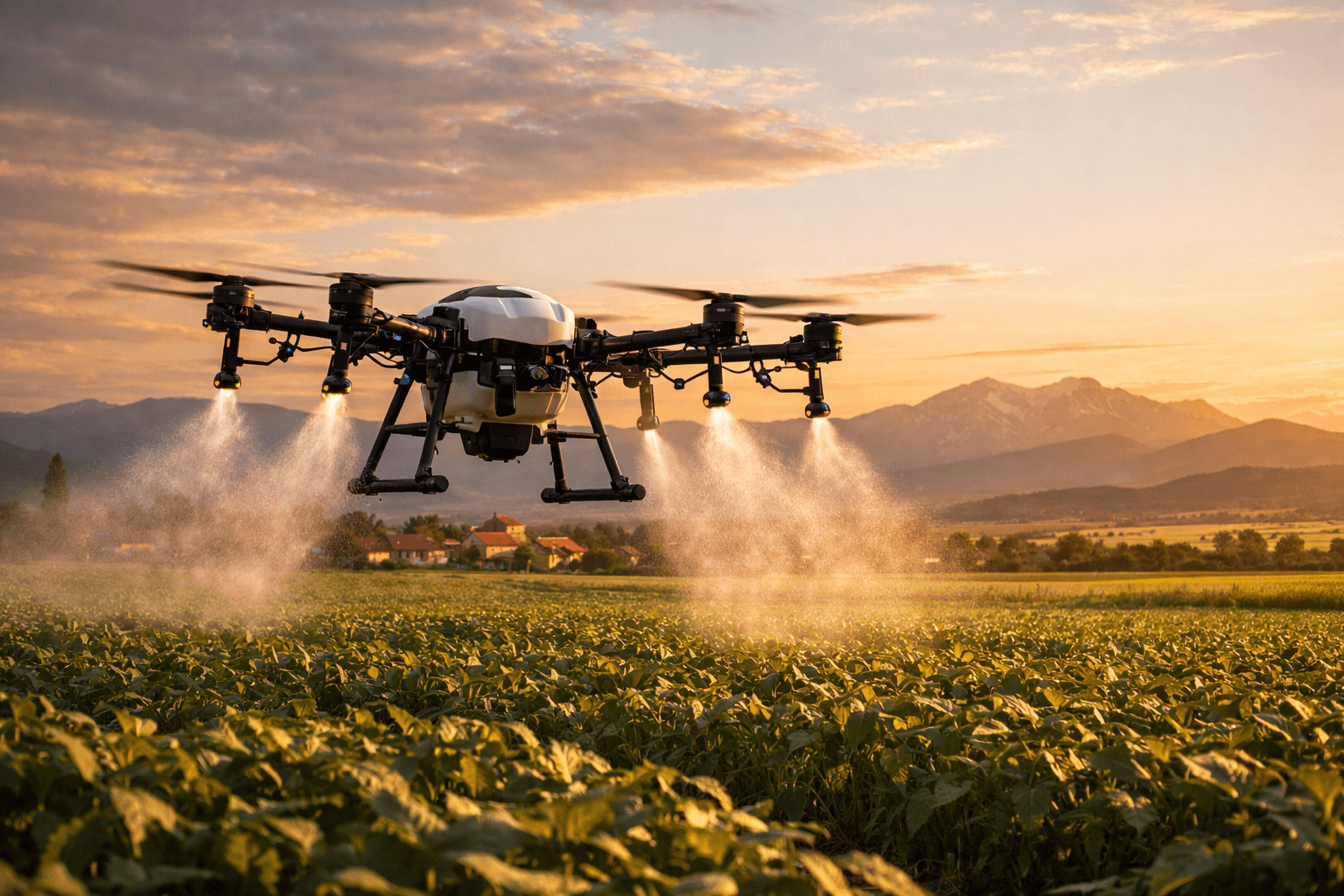
The DJI Agras T50 features 8 centrifugal nozzles that disperse the preparation into controlled droplets of 50 to 500 microns. Droplet size can be adjusted depending on the type of preparation and meteorological conditions.
The powerful rotors of the drone create a downwash airflow that:
- Directs droplets downward towards plants, minimising wind drift
- Lifts leaves, allowing the preparation to reach their underside
- Creates turbulence in the plant canopy, improving coverage
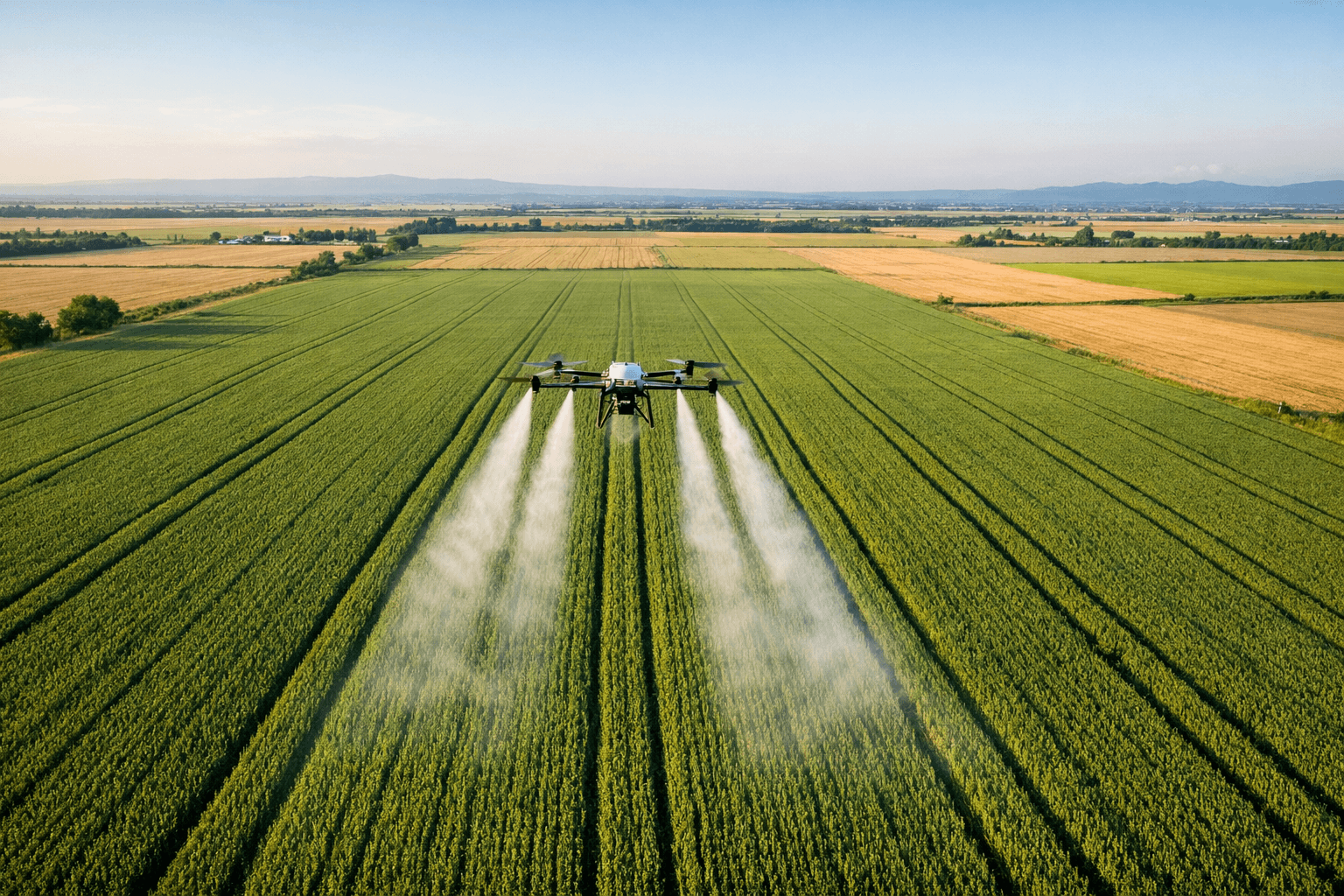
The result is coverage that is uniform and reaches all parts of the plant – something that ground sprayers rarely achieve. Learn more about the advantages of drones in agriculture.
Reduced Preparation Consumption
One of the most significant advantages of the drone for crop protection is reduced preparation consumption. The standard spraying rate with a drone is 1–3 litres of solution per decare, compared to 15–30 litres with ground spraying.
This means:
- More concentrated solution – the active substance is more concentrated, but the total quantity is optimal
- Less water – significant saving, especially in areas with water deficit
- Less residual solution – less contamination when rinsing
- Less preparation in the environment – the drone applies exactly the necessary quantity
Rapid Response in Crisis Situations
When a mass pest infestation or aggressive disease appears, every hour counts. The drone for crop protection offers a unique advantage:
- Mobilisation within hours – days of organisation are not needed
- Treatment of up to 200 decares per hour – rapid coverage of affected areas
- Operation on wet soil – when the tractor cannot enter
- Night operation – if necessary, the drone can work at night with the help of RTK navigation
For detailed information on how operators manage the process, see our article on how agricultural drones work.
Crop Protection for the Main Bulgarian Crops
Wheat
Wheat is Bulgaria's main cereal crop and is subject to numerous diseases and pests. The drone is especially effective for:
- Fungicide treatment against powdery mildew, rusts and septoria – usually in the stem elongation to early flowering stage
- Herbicide treatment – early in spring, when weeds are young
- Insecticide treatment against grain aphid and other pests
- Foliar fertilisation with microelements
Drone spraying of wheat is especially effective in a wet spring, when fields are waterlogged and ground machinery causes soil compaction. Learn more about wheat drone spraying.
Maize
For maize, the drone is indispensable in the later development stages when plants reach 1.5–2 metres in height. The tractor cannot enter without causing significant damage, and aviation is expensive. The drone for crop protection is the perfect solution:
- Treatment against European corn borer – timely insecticide spraying is critical
- Fungicide treatment against Helminthosporium and other leaf diseases
- Foliar fertilisation to maximise yield
For more information, read our article on corn drone spraying.
Sunflower
Sunflower is another important crop for Bulgarian agriculture. Drone treatment is suitable for:
- Fungicide spraying against white stem rot (Sclerotinia) and phoma
- Desiccation before harvest for uniform ripening
- Insecticide treatment upon infestation by aphids or cotton bollworm
Rapeseed
Rapeseed is a delicate crop that benefits greatly from the non-contact application of the drone:
- Autumn treatment with growth regulators to prevent stretching
- Spring fungicide treatment against Phoma and Sclerotinia
- Insecticide treatment against pollen beetles
Vineyards and Orchards
The specialised modes of the DJI Agras T50 enable effective treatment of permanent plantings too:
- Slower flight speed for better coverage
- Adapted height relative to the canopy
- Small droplet size for better penetration
- Possibility of working between rows
Ecological Benefits of Drone Crop Protection
Reduced Chemical Load
The precise dosing of the drone means that considerably less chemical substances enter the environment. This is important both for the soil and for water sources nearby.
Protection of Beneficial Insects
Thanks to directed application and minimal wind drift, the drone for crop protection reduces the impact on beneficial insects – bees, ladybirds, lacewings and other natural enemies of pests.
This is especially important for farmers who have apiaries nearby or participate in biodiversity conservation programmes.
Smaller Carbon Footprint
The drone uses electrical energy instead of diesel fuel. One DJI Agras T50 operating all day consumes electricity equivalent to a few litres of diesel – incomparably less than a tractor with a sprayer.
Soil Preservation
Without physical passage through the field, the soil preserves its structure. This is an investment in the long-term health of the land – better porosity, more active microbiological activity, less erosion.
Regulations and Safety
Legal Framework in Bulgaria
The use of drones for agricultural purposes in Bulgaria is regulated by the General Directorate "Civil Aviation Administration" and European regulations. Operators must hold the corresponding permits and certificates.
At AirAgro all our pilots are certified and we operate in full compliance with current legislation.
Preparation Safety
When working with a drone for crop protection, it is important that preparations are approved for aerial application. Our team knows the regulations and can advise you on suitable preparations and dosages.
Safe Buffer Zones
The drone enables very precise compliance with buffer zones near water bodies, residential areas and neighbouring plots. GPS navigation guarantees that spraying stops exactly at the defined boundary.
Practical Tips for Farmers
If you are considering using a drone for crop protection, here are some practical tips:
Plan Treatments in Advance
Contact a drone service provider before the season begins and discuss a treatment plan. Early planning guarantees availability during critical periods.
Consult an Agronomist
Drone technology is powerful, but must be combined with proper agronomic judgement. Choose the right preparation, right dose and right timing.
Monitor the Weather Forecast
Optimal conditions for drone spraying are: temperature 10–25°C, wind up to 3–4 m/s, no rain in the next 2–4 hours, humidity above 40%.
Prepare the Field
Remove or mark obstacles (temporary poles, irrigation hoses), ensure field access for the team and inform neighbouring farmers.
The Future of Crop Protection
Technologies in drone crop protection are developing rapidly:
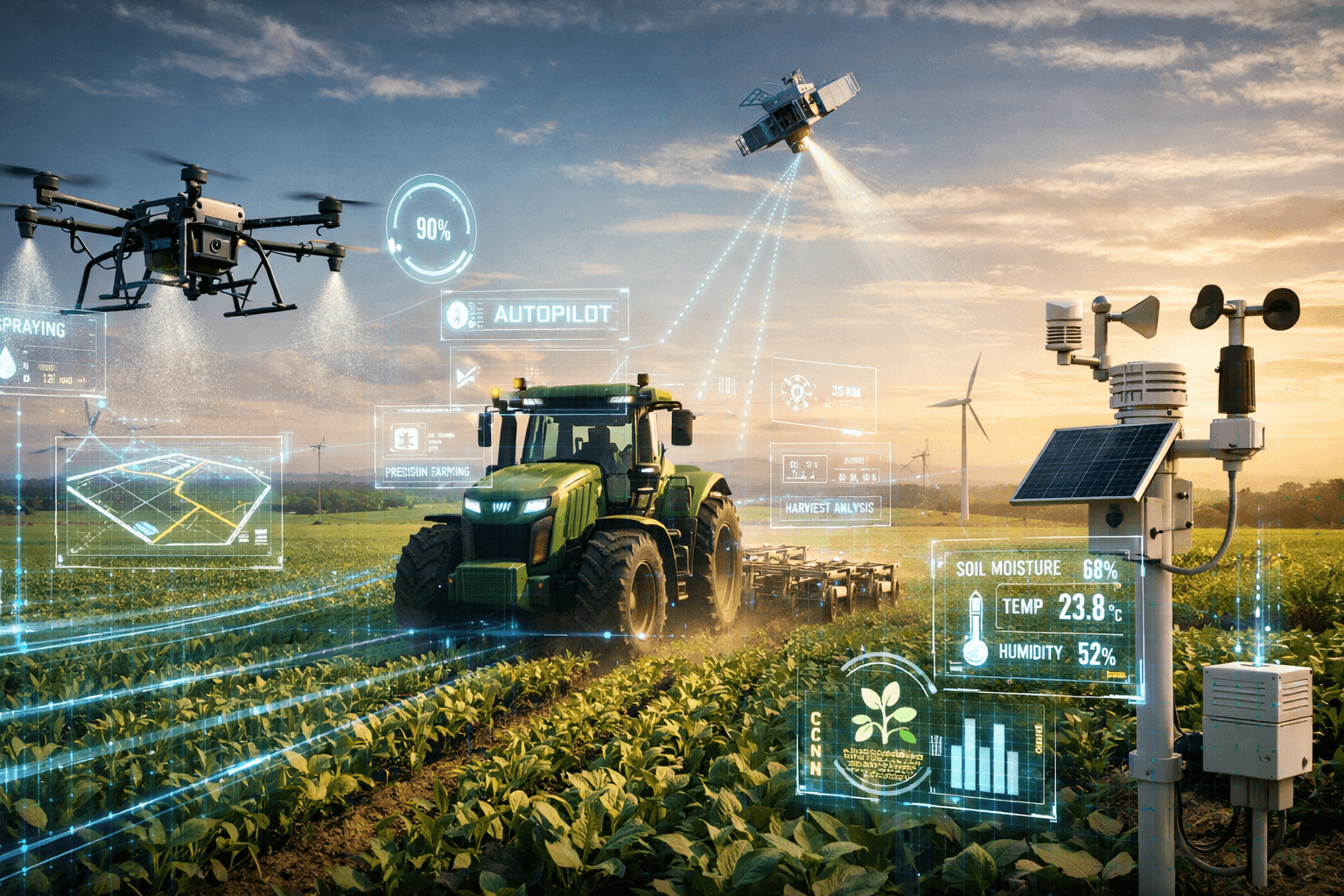
- AI disease recognition – the drone will identify problem zones and treat only those
- Biological crop protection – drones for dispersing beneficial insects (Trichogramma) and biopesticides
- Multispectral monitoring – early detection of stress factors before visible symptoms
- Integration with meteorological data – automatic planning of the optimal treatment time
Regions Where We Offer Crop Protection with a Drone
AirAgro serves agricultural farms in key regions of Bulgaria:
- Plovdiv and the Thracian Plain – cereal, vegetable and fruit farms requiring fungicide and herbicide treatment
- Stara Zagora – intensive crop protection for wheat, barley and sunflower
- Pazardzhik – diverse crops including vegetables and orchards
- Haskovo – vineyard areas and arable crop farms requiring precise spraying
- Dobrudzha – vast areas of wheat and sunflower, where the drone achieves maximum efficiency
- Thrace – fertile soils and a favourable climate for comprehensive crop protection
In each of these regions we offer a full range of treatments – herbicide, fungicide, insecticide spraying and foliar fertilisation.
Frequently Asked Questions
What crop protection preparations can be applied by drone?
All types of liquid preparations can be applied with an agri drone – fungicides (against powdery mildew, rust, septoria), herbicides (for weed control), insecticides (against pests) and preparations for foliar fertilisation. It is important that preparations are approved for aerial application.
Is crop protection with a drone more effective compared to a tractor?
Yes, the drone ensures more uniform coverage and reaches the underside of leaves thanks to the airflow from the rotors. The result is up to 30% less consumption of fungicides and herbicides at the same or better effectiveness. See the detailed drone and tractor comparison.
How quickly can emergency treatment be organised?
In the event of mass pest infestation or aggressive disease, the AirAgro team responds within 24–48 hours. The DJI Agras T50 treats up to 200 decares per hour, enabling rapid crop protection even of large areas in the Plovdiv, Stara Zagora and Dobrudzha regions.
Can the drone treat vineyards and orchards?
Yes, the DJI Agras T50 has specialised modes for permanent plantings – slower speed, adapted height and fine droplet size. This is especially useful for vineyard areas in the Haskovo and Plovdiv areas.
Do you offer a crop protection plan for the entire season?
Yes, we offer seasonal subscriptions with an individual treatment plan – from early spring herbicide spraying to late fungicide treatment and desiccation. Contact us for a free consultation and receive a personalised plan.
Get Started with AirAgro Today
Crop protection is an investment, not a cost. The right treatment at the right time can make the difference between a good and an excellent harvest. The drone for crop protection gives you the tool to achieve exactly that.
Request a free consultation and farm inspection:
- Free consultation with our crop protection specialists
- Personalised treatment plan with selection of fungicides, herbicides and insecticides
- Drone demonstration of the DJI Agras T50 on your field
- Full accountability and documentation after every treatment
See the full range of agri-drone services we offer, or go directly and order drone spraying.
Contact us at airagro.bg and protect your crops with modern technology. Farmers from Plovdiv, Stara Zagora, Pazardzhik, Haskovo and Dobrudzha already trust AirAgro – don't give pests the upper hand, request a free consultation today.